
Let's talk about the real reason you're here
Years into a relationship, sex gets predictable. Not bad, necessarily, but the edges blur together. You know each other's bodies so well that you've stopped actually noticing them. A clitoral vibrator like the Lem can break that pattern, but only if you approach it right. The tension isn't the toy itself. It's the conversation.
Introducing a lemon vibrator after years together isn't about fixing what's broken. It's about giving permission to explore something new when comfort has replaced curiosity. That's a different conversation than introducing toys early in a relationship, and it takes different moves.
Why partners resist toys after a long time together
Here's the thing nobody says out loud: after years together, introducing a vibrator can feel like a referendum on whether what you've been doing is enough. It isn't, logically, but emotionally? For lots of people it lands that way.
A partner might worry that a toy means they're not satisfying you. Or that you're comparing them to something else. Or that you've secretly wanted this the whole time and never said anything, which opens a bigger conversation about what else isn't being said. These feelings are real even when they're not rational.
For the person who wants to introduce a clitoral vibrator, there's often guilt too. Shame that you want something different. Fear that naming desire after years of not naming it signals that you're unhappy. Both partners can end up in a holding pattern where nobody brings it up, and the status quo just continues.
The conversation comes before the toy
Seriously. Do not buy a Lem and hope it magically appears as a suggestion. That's not how this works.
Start with something low-stakes. "I've been curious about trying something new" is different from "Our sex life is boring and I need this." Pick a time when you're not in bed. A random weeknight conversation works better than a setup. The goal is to normalize the idea before there's any pressure attached to it.
If your partner pushes back, don't defend the toy. Defend your right to explore. "This isn't about you not being enough. It's about me being curious about my own body." That's not a criticism of them. It's a boundary around your own pleasure.
Some partners will need time. That's fine. Circle back in a few weeks. What you're doing is shifting the culture in the relationship from "we don't talk about this" to "we can talk about anything."
Start small with the physical introduction
If your partner has agreed to try, the first time should not be a full production. That's another way things go sideways. You both show up nervous, it feels performative, and nobody relaxes enough for anything to feel good.
Instead, let them hold the Lem first. Not during sex. Just in your hands during foreplay. Let them see how light it is, how it feels, how it works. This removes the mystery and the intimidation factor. A lemon vibrator is just a tool. It's not a threat.
Then the next time, turn it on while you're kissing or touching. No penetration, no expectation of orgasm. Just sensation. Your partner watches you respond to something they're helping you explore together. That's a completely different dynamic from you hiding under the covers with it.
How to actually use it together
There are a few positions that work well when both of you are involved.
First: you sitting between their legs while they're behind you. They have a clear view of what's happening. They can touch you, kiss your neck, adjust their own stimulation. You control the Lem. It doesn't feel like you're doing something to them or hiding. It's collaborative.
Second: facing each other while they're inside you or stimulating you manually, and you use the Lem on your clitoris. This is often when people have their most intense orgasms because they're getting multiple sensations and full eye contact with their partner. If your partner worries the vibrator replaces them, this arrangement makes it clear it doesn't. You're still fully connected.
Third: you on top, they underneath. You control depth, angle, and where the Lem goes. You're in charge of your own orgasm while they're still involved. This position works particularly well if you've been having trouble climaxing during partnered sex.
The key across all of these: your partner isn't just watching. They're touching, they're engaged, they're part of the decision-making about pressure, speed, and timing.
What changes after the first time
If it goes well, something shifts. You've crossed into a space where toys aren't scary or shameful. They're just part of your toolkit. Your partner realizes that using a Lem doesn't diminish them. It often makes sex better for both of you because there's less pressure on your partner to be the sole source of your orgasm.
Some partners become enthusiastic about it. Others remain neutral but accepting. Both are fine. You're not looking for your partner to love the toy. You're looking for them to support your pleasure, which is different.
That said, watch for your own relationship patterns. If you're the only one who has ever suggested anything new, and your partner goes along passively, a clitoral vibrator won't fix that. What you need is deeper communication about what both of you actually want, not a new toy.
When the toy becomes routine
After a few times, the Lem stops feeling like a special event. It's just part of what you do. That's actually the goal. At that point, you can integrate it more naturally into sex without the emotional weight of "we're being adventurous." You're just doing what feels good.
This is also when a lot of couples introduce variation. Maybe your partner uses it on you instead of you controlling it. Maybe you use it while they're watching. Maybe you bring it into partnered sex less frequently, but when you do, you both know what to expect and it feels comfortable.
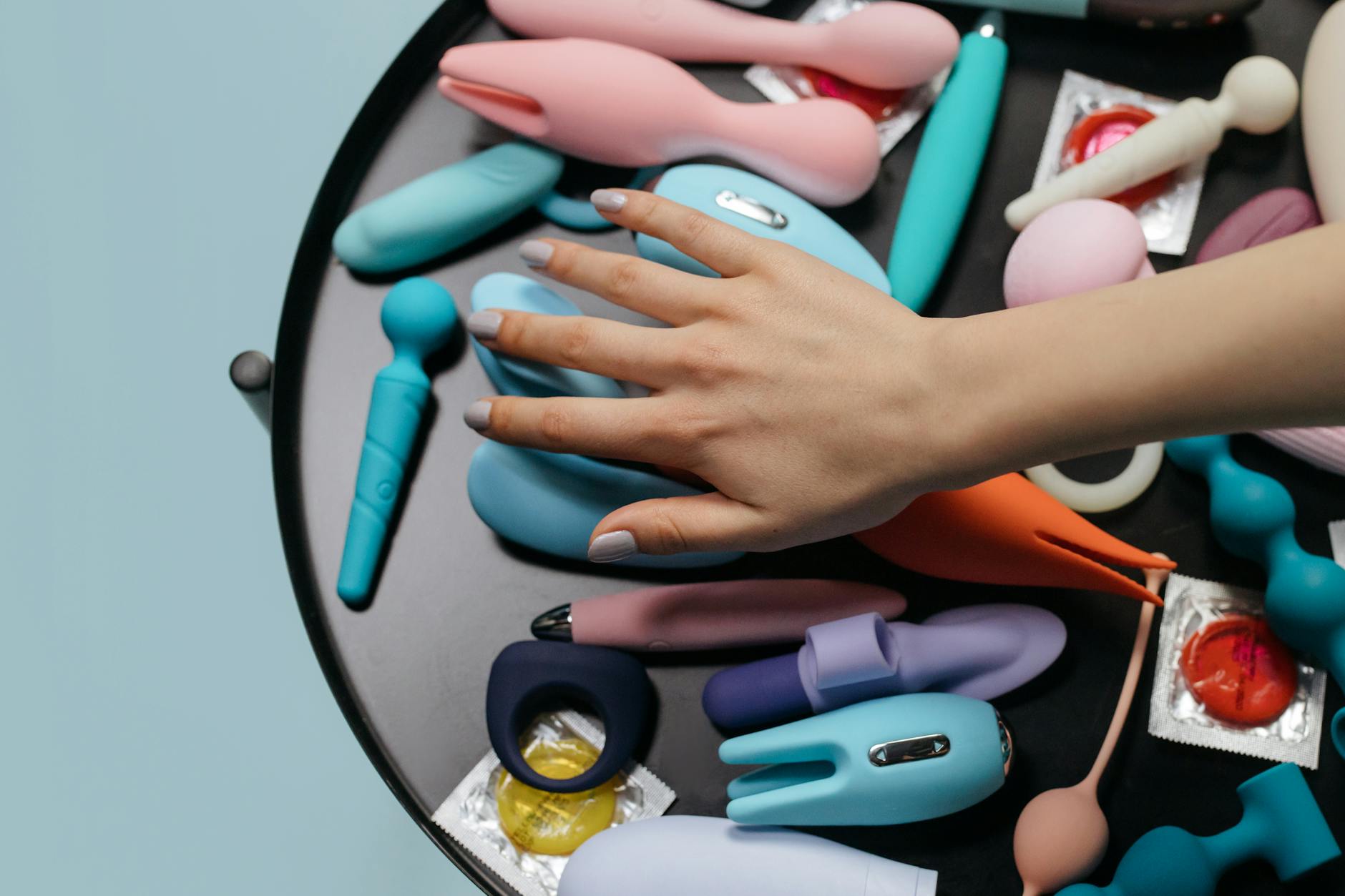
Photo by cottonbro studio on Pexels
Troubleshooting: what happens if it doesn't go smoothly
Maybe your partner agrees to try it but then seems resentful or withdrawn during sex. That's a sign the conversation isn't actually complete. Pause the toy experiment. Go back to talking. "I noticed you seemed uncomfortable. Let's figure out what's going on." Sometimes people say yes when they mean no, or they agree to something they're not actually ready for.
Or maybe you introduce it and realize your partner is only willing to use it because you want to, but they're not actually into it. That's also information. It's not a deal-breaker unless you make it one. Some partners will always be skeptical of toys. What matters is whether they respect your interest in them.
If your partner refuses entirely, and toys are important to you, that's a values conversation. You might need help from a counselor to figure out whether this is something you can move past together.
The bigger thing that happens
When you successfully introduce a clitoral vibrator with a long-term partner, something shifts beyond just sex. You've named a desire. You've taken a risk. You've asked for something and been supported. That's the real win. The toy is just the vehicle.
Pairs who can do this often find that other conversations become easier too. Asking for what you want in bed translates to asking for what you want in the rest of life. Permission granted in one space often expands into others.
People also ask
Will using a toy with my partner make them feel inadequate?
Only if you frame it that way. A clitoral vibrator adds sensation; it doesn't replace your partner. In fact, most couples report that toy use brings them closer because there's less pressure on the partner to be the sole source of orgasm. What your partner needs to hear is: "This isn't about you not being enough. This is about exploring my own pleasure with you."
How do I bring this up without making it weird?
Don't make it weird by treating it as weird. Bring it up the same way you'd bring up any other conversation: when you're calm, not during sex, and framed as something you're curious about rather than something you're unhappy about. Try: "I've been thinking about trying something new, and I'd like your input." That's all. Simple, direct, collaborative.
What if my partner wants to use the lemon vibrator alone without me?
That's fine. A clitoral vibrator is your toy; you get to decide how it's used. If your partner wants solo time with toys, that's a separate conversation about boundaries and comfort. Those conversations are healthy. Not every sexual experience needs both partners present.
How often should we use a clitoral vibrator once we've started?
As often as you both want to. There's no rule. Some couples use it most times they have sex. Others use it occasionally. Some pairs use it for a few months and then it fades into the background. All of those are normal. What matters is that you're both choosing it, not that it becomes obligatory.
Can a vibrator help with orgasm frequency in a long-term relationship?
Yes, for many people. Clitoral vibrators often help because they provide consistent, targeted stimulation that's sometimes harder to achieve through manual or partnered stimulation alone. If you've been having trouble reaching orgasm, a toy like the Lem can help you understand your own response better, which can improve partnered sex too.
What's the difference between using a toy alone versus with a partner?
Solo use is about learning your own body without performance pressure. Partnered use is about shared experience and connection. Both have value. Solo exploration with a clitoral vibrator often teaches you what works for you, which you can then bring into partnered sex. So they complement each other.