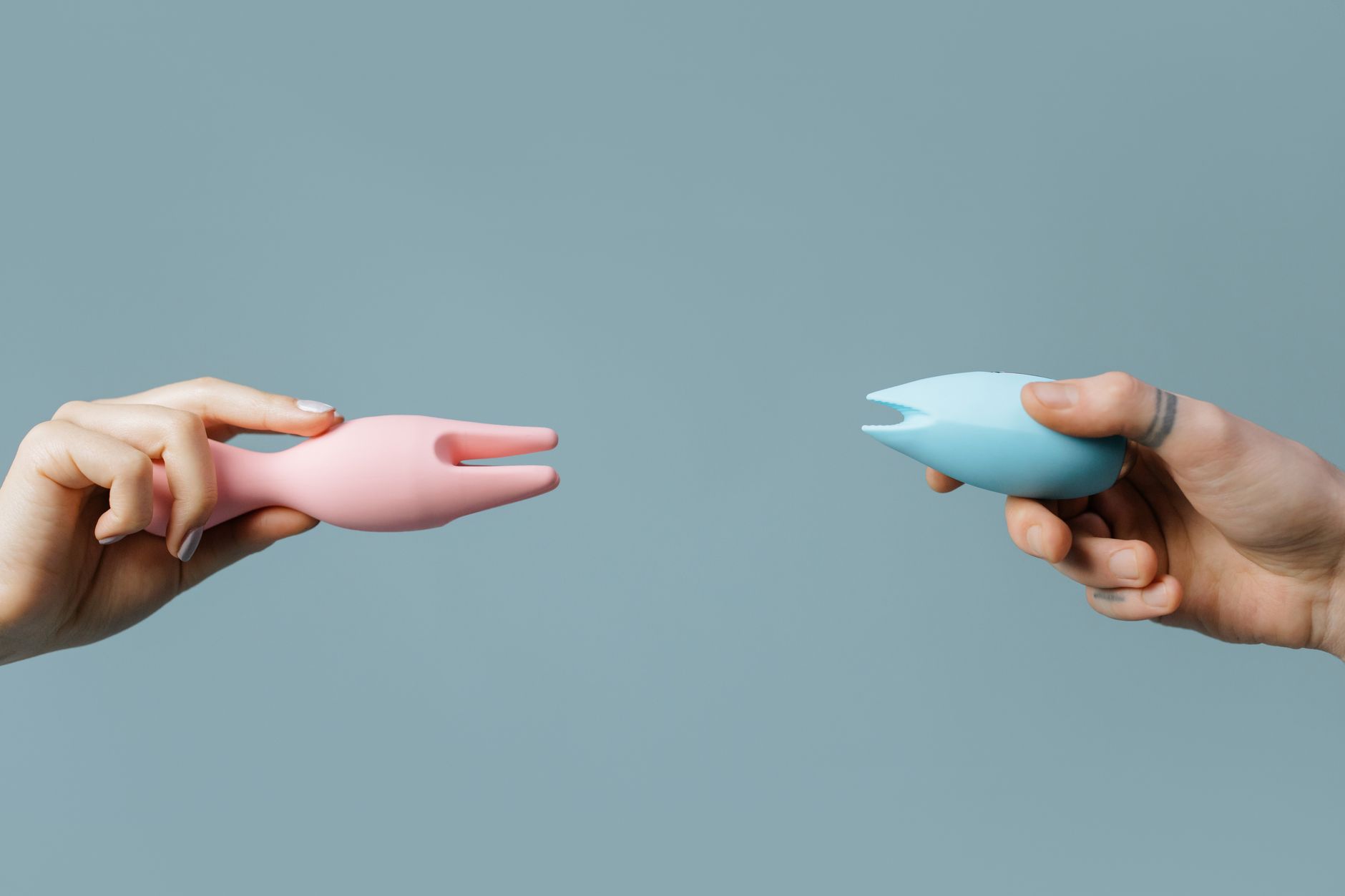
One person reaches for a clitoral vibrator during partnered sex. The other person freezes. "Does that mean I'm not enough?" they ask, even if they don't say it out loud. The vibrator gets tucked away. Pleasure goes down. Resentment hums quietly in the background.
This is the script most of us inherited. But it's backwards.
A lemon vibrator isn't a replacement for your partner. It's a translator. It's a way to show them exactly what you need, what you like, where and how you want to be touched. It turns solo pleasure into shared information. And when you do this well, most couples report that sex feels more intimate afterward, not less.
Two main reasons come up in my practice. First: the fantasy that "real" sex shouldn't require tools. We're sold this idea that good lovers intuitively know what to do. They don't. No one does. Everyone guesses. The partner who can read your body because you're using a lemon vibrator is actually more in tune with you, not less.
Second: fear of comparison. If you use a clitoral vibrator, your partner worries you're mentally checking out, or that they're inadequate. What's actually happening is the opposite. You're asking them to pay attention to something true about your body. That takes courage from both people.
Here's what I tell couples: a lemon vibrator gives you the data you need to move closer, not further apart.
Introduce this when you're not in bed. Timing matters. Pick a moment when you're relaxed, when sex isn't imminent, when neither of you is defensive.
Frame it clearly. "I've been thinking about something I want to try together. I want to use a clitoral vibrator during sex because my orgasm works better with that kind of stimulation. This isn't about you. It's about my body. I'd like you to be part of this."
Listen to what comes back. If your partner says "I'm worried you won't need me," that's not actually about the vibrator. That's about feeling valued. Address that first. "I need you. I want this because I want both of us to feel good. Your hands, your mouth, your presence. The vibrator just helps me get there."
If they say they feel awkward or unsure how to help, that's workable. You can walk through it together.
Most people picture the vibrator replacing penetration. That's one option. But the deeper connection usually comes from something else: you both stay present.
During partnered penetration (whether penis, strap, or fingers), hold the lemon vibrator against your own clitoris. Your partner can feel the vibration through their body. They're inside you. You're using the tool. Everyone's nervous system is synced up. Your breathing changes together. That's intimacy.
You might also ask your partner to hold the vibrator. "Can you use this while we're together?" Now they have a job beyond guessing. They're responding to your body in real time. You say "slower" or "a bit to the left" or "exactly there." They adjust. That's communication made tangible. It sounds clinical. In practice, it feels like someone finally understanding you.
Another option: use the lemon vibrator for foreplay, then move into partnered sex. Build your arousal with clitoral stimulation first. The vibrator gets you close. Then transition to penetration while you're already engaged. Some people find that easier because the nervous system is already activated.
I ask this question in sessions: "How does it feel on your end when your partner uses a vibrator?"
Most partners say the same thing. Relief. They stop guessing. They can watch you respond in real time. They get to be part of your pleasure instead of carrying the entire weight of it.
Many also say it's a turn-on. The vibration is felt during penetration. Your body's response changes. You move differently, breathe differently. They're getting more information about what you like. That data is erotic.
Some worry they'll "feel" the vibrator too much or that it's weird. That usually passes after the first time. The weirdness is in the anticipation, not the reality.
Lubrication matters. If you're using a lemon sucker or clitoral vibrator, water-based lube makes everything feel better. It reduces friction, makes the sensation smoother, and keeps the vibe from sticking in weird ways.
You might need to angle differently than usual. If your partner is inside you and you're using a vibrator on your clitoris, you're taking up more space. That's fine. It just means repositioning. Spooning can work better than missionary if you want to use a lemon vibrator together.
Battery life. Check it before you start. Nothing kills connection like "hold on, it's dying." Keep it charged.
Noise level. If you're using a lemon clitoral vibrator in a house with other people around, some are quieter than others. Factor that in if you need to.
First time using a vibrator together often feels awkward. That's normal. Don't treat it like a special event. The less ceremonial you make it, the faster it becomes normal.
Use it a few times without making it the main event. Don't try to have the best sex of your life the first time you introduce it. Set the bar at "we both felt comfortable and connected." That's it.
After a few times, it stops being "that weird thing we tried" and becomes just part of how you have sex. Now you have data about what actually works for your body. That's powerful.
Most couples report three shifts. First: less performance anxiety. You're not pretending you're close to orgasm when you're not. The vibrator tells the truth about your body's timeline. That's relieving for everyone.
Second: better communication. If you can ask your partner to adjust the vibrator slightly, you can ask them other things too. "A bit more to the left" becomes "I need more time" becomes "I'm feeling disconnected." The vibrator is just the practice ground.
Third: more sex. Counterintuitive, but couples who use toys together usually have more frequent sex. Why. Because sex is more likely to feel good for everyone. When both people consistently experience pleasure, people want more of it. It's that simple.
Sometimes one partner is genuinely not comfortable. That's information, not failure. There's no amount of conversation that will make someone ready if they're not. The move then is to slow down, not push.
"I hear you're not ready yet. That's okay. Can we talk about what would need to change?" Maybe it's insecurity. Maybe it's religious conditioning. Maybe they need more time. Whatever it is, forcing it will backfire.
If you've talked multiple times and nothing shifts, consider talking to a couples therapist. This often points to a bigger conversation about desire, worth, or control that deserves more than pillow talk.
Using a lemon vibrator together isn't a workaround for a broken connection. It's a tool for deepening one that's already there.
Here's what I see in my practice: when people use clitoral vibrators during partnered sex, orgasms get stronger and more reliable. Your partner gets to watch you come in a way that's actually achievable for your body. That's hot for both people. You're not grinding your teeth trying to come for their ego. You're actually there, present, experiencing pleasure. They get to see that. That's connection.
A lemon clitoral vibrator is just technology. But technology, used with intention and communication, becomes intimacy.
Most clitoral vibrators work fine during penetration. The lemon vibrator is designed with this in mind. Its shape and size make it easy for your partner to access and hold while still staying close to you. But any vibrator with a stable grip works. The key is positioning, not the specific toy.
Partially. A vibrator makes orgasms more reliable, which can shift frequency. If you orgasm reliably with a lemon vibrator, you might want sex more often. But if one person wants sex twice a week and the other wants it twice a month, a vibrator won't solve the underlying mismatch. That's a conversation about desire, not a tool problem. That said, <a href="/blog/how-to-use-lemon-vibrator-when-partners-initiate-at-different-times">using a lemon vibrator can help couples sync up when timing is off</a>.
It might feel weird the first time. By the third time, most couples say it feels natural. The weirdness usually comes from expecting it to be weird, not from the actual sensation. After a few tries, it becomes just part of the rhythm.
Not dependent, just aware. Your body has a preference. That's information, not a problem. Some bodies orgasm more easily with consistent clitoral stimulation. That's not a flaw. It's just how your nervous system is wired. The lemon vibrator is the tool that works for you. Use it. Your pleasure matters.
Direct and low-pressure. "I've been thinking about something. I'd like to try using a clitoral vibrator during sex because I think it would help my body feel better. I want to do it with you." Expect some initial resistance. That's normal. Give them time. Answer questions. Show them it's not a referendum on them or the relationship. Then check back in a week. Sometimes people need processing time.
It can be part of rebuilding it, but it's not the cure. <a href="/blog/how-to-use-lemon-vibrator-to-reconnect-with-partner-after-kids-grown-up">Couples who reconnect after years of distance often need to restart communication first</a>. A vibrator is a tool for pleasure, not a relationship repair kit. That said, if intimacy is low because sex doesn't feel good for one or both people, fixing that can reignite connection. But talk first. Tools second.
If this resonates with you, the next step is actually having the conversation. Not planning it, not worrying about it. Just naming it out loud.
"I'd like to explore something that might make sex feel better for me." That's enough to start.
Your pleasure matters. Your partner deserves to know what actually works for your body. A lemon vibrator is just a way to tell them. When you do that together, sex becomes something you're creating as a team, not something you're performing for each other.
That's when things shift.
Have questions about using a clitoral vibrator with your partner? We're here. Reach out at <a href="/contact">contact</a>.