Let's name the real problem
It's rarely about the toy itself. When a partner resists lemon vibrators or any clitoral vibrator, they're usually reacting to one of three things: fear that you'll prefer it to them, shame about their own sexuality, or the sense that it's criticism dressed up as foreplay. None of those things go away if you just buy a toy and surprise them with it. All of them get worse.
I've worked with hundreds of couples where one person wanted to explore lemon sexual toys and the other flatly refused. The conversations that actually worked weren't about convincing. They were about understanding what was underneath the "no."
The difference between resistance and hard boundaries
First, separate two things that feel the same but aren't.
Resistance often sounds like: "I don't know, it feels weird," "Why do you need that?" "Isn't what I do enough?" or "Let's just not." It's discomfort, not a dealbreaker. Resistance moves if you approach it with curiosity and time.
A hard boundary sounds like: "I'm not interested and I don't want to discuss it," or "If you use toys, I won't be interested in sex with you." That's different. If your partner draws that line clearly and you're fundamentally incompatible around it, toys aren't the real problem. Couples therapy is.
Most people resist. That's where real work happens.
Before you say anything
Don't lead with the ask. That almost always backfires because it centers the toy instead of the relationship.
Instead, spend a week or two asking better questions about sex itself. Not about toys. About what they actually want, what's missing, what turns them on that you haven't explored. Listen without trying to fix anything. Most people have fantasies, preferences, or desires they've never mentioned because they assumed their partner wouldn't care or would judge them.
This does three things. It signals that sex between you matters and that you're genuinely interested in their pleasure. It softens defensiveness because you're not asking them to change. And it usually surfaces the real reason they're resistant to toys in the first place.
The conversation that actually works
When you're ready to bring it up, do this.
Pick a moment that's neutral. Not in bed. Not right before sex. Not when one of you is stressed. Couch, coffee, a walk. Somewhere you can both relax and talk without feeling exposed.
Frame it around your pleasure, not theirs. "I've been thinking about trying something that would really help me get there faster," or "There's a type of stimulation I want to explore that I think could change things for us." This matters. If it sounds like you're saying their touch isn't enough, they'll lock down. If it sounds like you're curious about a new avenue for pleasure, they're more likely to be curious too.
Then be specific about what you want. "I'm interested in trying lemon clitoral vibrators during sex. I've read that they work really well for my body type and I'd like to try one with you." Not "I need you to use this on me." Not "I want to get off without you." Just the fact.
Then stop talking. Let them react. Don't defend. Don't over-explain. Don't pull out studies or data. You've said what you meant to say.
What they might say and what it actually means
"Why? Am I not enough?" Usually this means: "I'm scared this means you don't want me." The honest answer is, "You are. I also want to explore my own body and what feels good. That doesn't replace you." Then give them a real role. "I'd like you to watch. I'd like your hands on me too. I want this to be something we do together, not something I do alone."
"That's weird." Translation: "This doesn't fit the idea of sex I grew up with." You can say, "I know it feels that way. A lot of people have never even talked about their own pleasure, let alone toys. I get that it's unfamiliar. I'm asking you to try it anyway." And then be patient while they adjust.
"I'm worried I'll be replaced." This one is honest and fixable. Tell them directly: "You won't be. A lemon vibrator isn't a person. It's a tool that helps my body feel good. So does a pillow, so does a vibration from the car. But none of those things are you."
If they say they need time, give them time. But set a timeline. "I'm not going to push you today. But I'm going to bring this up again in a couple of weeks." Vagueness keeps the door open to avoidance forever.
How to actually use one together when they're still hesitant
Don't start with lemon vibrators during partnered sex. That's the final step.
Start in a low-stakes context. Use one solo and just mention it casually after. "I tried it, it was interesting." You're normalizing it. Then do it again. Then tell them you're using it and ask if they want to be in the room. Keep asking until they say yes.
When they do, they don't have to touch it or participate. They can literally just watch. Removing the pressure to do anything is everything. Many partners who "refused toys" just needed to see that toys aren't threatening. They're boring, actually. Mechanical. Nothing like a person.
Once they've watched, the next step is easier. "Can I use this while we're having sex?" Very different from "I want to use this instead of sex with you."
When you do introduce it during partnered sex, use it on yourself. Don't hand it to them. You're showing them that you're in charge of your own pleasure. You're not asking them to use a tool they don't understand. You're just adding a layer to what's already working.
The reframe that changes everything
Here's what shifts the dynamic in relationships where toys have been a sticking point.
Stop treating the toy as something you're asking permission to do to yourself. Treat it as information about what makes your body feel good. "I learn something new about what I like every time I explore," is radically different from "I need this thing." The first is self-knowledge. The second sounds like a complaint.
When partners see toys as a form of self-discovery rather than a replacement for them, resistance softens. Suddenly you're not saying their touch isn't enough. You're saying you're curious about your own body. Most partners find that attractive.
Also, get curious about them. After they've watched you use a lemon vibrator, ask what they noticed. Did they feel left out? Curious? Turned on? Was there a moment it changed for them? These conversations are where real connection lives.
If they genuinely won't budge
Then you have a choice to make.
You can use toys solo, which is completely valid and often satisfying. You can build that pleasure on your own time, in your own space. That doesn't require their permission.
Or you can recognize that this is a bigger incompatibility than just toys. Maybe you want partner sex that includes exploration and novelty, and they want it to stay the same. Maybe you have different relationships with pleasure. Maybe you're outgrowing each other's sexual pace or curiosity.
Toys aren't usually the real argument. They're the stand-in for a deeper question: do we both care about each other's pleasure enough to try something new? If the answer is no, that's information worth having.
Why lemon clitoral vibrators work for this specific conversation
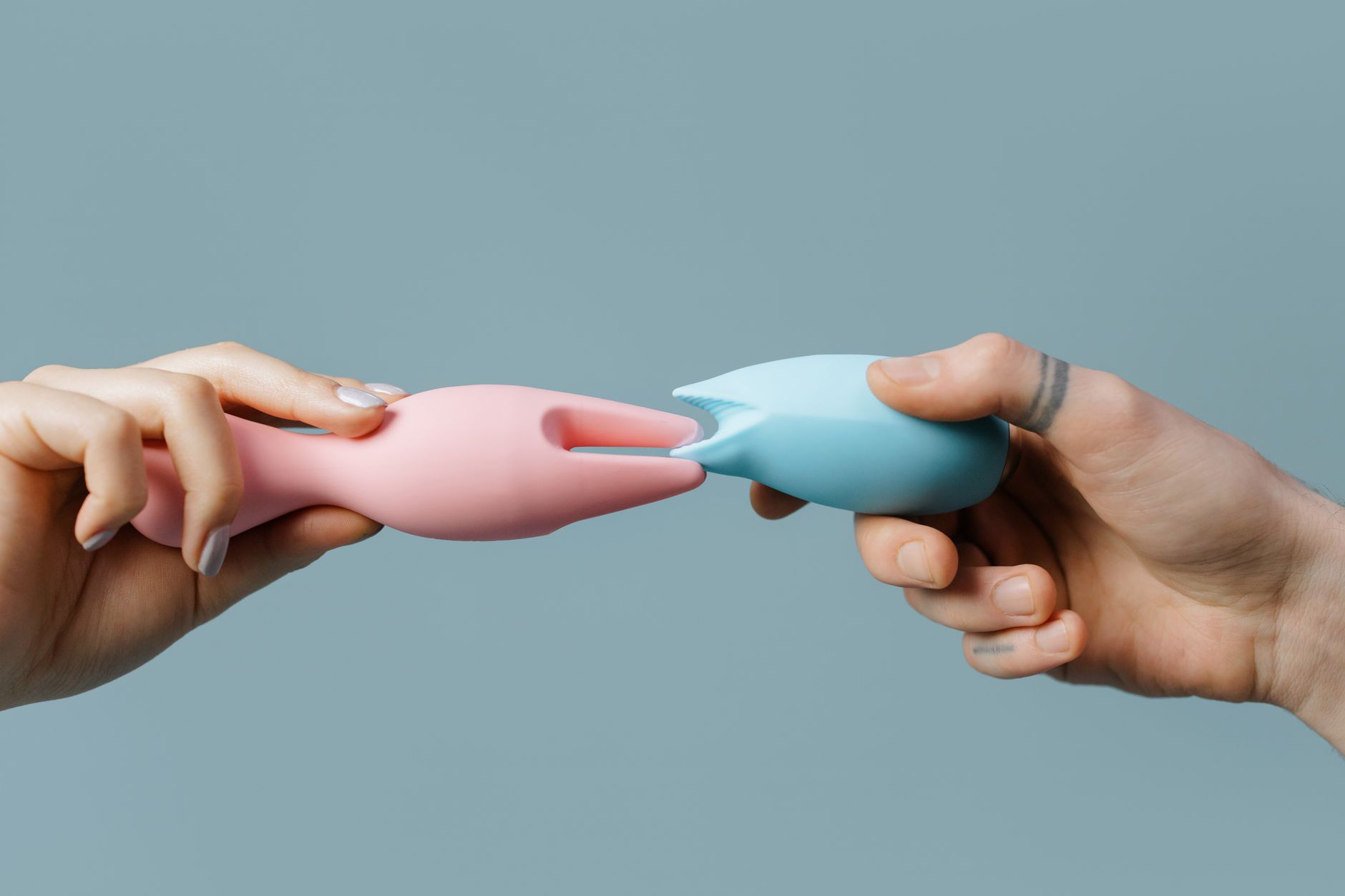
Lem vibrators and other lemon sucker-style toys have a design advantage in reluctant-partner situations. They're not intimidating. They look nothing like traditional dildos. They're conceptually simple: suction, not vibration. Partners who are resistant often find that less threatening because there's less machinery, less novelty, less "this is replacing me" energy.
Also, they're smaller. A partner who's nervous about toys worries less about waking up to a massive wand vibrator than something pocket-sized. You can introduce a Lem vibrator without it feeling like a production.
The long game
Most couples who eventually use lemon vibrators together or solo didn't get there through one perfect conversation. They got there through patience, repeated exposure, and one person staying curious instead of frustrated.
Your partner might never love the idea of toys. But they can learn to be fine with it. They can even learn to enjoy watching you enjoy it. And sometimes that's enough.
The key is separating the toy from the relationship question underneath it. That's always the real negotiation.
People also ask
Why does my partner feel threatened by lemon vibrators?
Most partners who react negatively to toys aren't actually threatened by the object itself. They're reacting to what it might mean: that you're seeking pleasure outside the relationship, or that their touch isn't satisfying, or that they're somehow being replaced. These are relationship questions, not toy questions. Address the emotion, not the device. Once your partner understands that a lemon clitoral vibrator is about exploring your own pleasure and can even enhance partnered sex, much of the threat dissolves. Couples therapy can help if the resistance is tied to deeper insecurity.
Can I use a Lem vibrator during sex with a partner who's resistant?
Yes, but not on the first conversation about toys. Start by using it solo and mentioning it casually. Then use it in front of them when they're present but not required to participate. Then ask if you can use it during partnered sex. Each step lowers resistance because you're proving it's not a threat. When you do use it during sex, use it on yourself rather than asking your partner to use it on you. This makes it clear that you're exploring your own pleasure, not asking them to do something unfamiliar.
What if my partner says no and won't change their mind?
You have two paths. The first is to accept their boundary and use lemon sexual toys solo, which is completely valid and often deeply satisfying. The second is to recognize that this might be a deeper incompatibility around pleasure, curiosity, or willingness to adapt that goes beyond toys. If you fundamentally want a sexual relationship that evolves and your partner doesn't, that's worth examining honestly. Toys aren't usually the real issue. They're the catalyst that reveals what the real issue is.
How do I frame using toys so it doesn't feel like criticism?
Frame it around self-discovery, not around what's missing. "I'm curious about what my body responds to" is different from "I'm not satisfied." Also, give your partner a role. "I want you to watch," or "I want your hands on me too," makes it collaborative rather than exclusionary. Finally, normalize pleasure exploration as separate from partner sex. A lemon vibrator is a tool for learning about yourself, like journaling is a tool for learning about your feelings. Your partner doesn't need to journal with you for you to have internal growth.
Why do some people refuse toys more than others?
Often it's tied to how someone was raised around sexuality. People who grew up in environments where pleasure was shameful, or where "good" sex looked a certain way, often have more resistance to anything that feels nontraditional. It can also be tied to religious beliefs, to past relationships, or to insecurity. Understanding the source of resistance is more useful than trying to overcome it through persuasion. Once you know why someone resists, you can address the actual issue rather than just the surface behavior.
Is it normal to want to use lemon clitoral vibrators while partnered?
Completely normal. Many people enjoy lemon vibrators, hello nancy toys, and other clitoral vibrators during partnered sex because it changes the type of stimulation and can lead to deeper or different orgasms. It's also increasingly common for couples to explore toys together. If your partner resists, it often says more about their comfort with sexuality and change than about whether the desire itself is reasonable. Your pleasure matters.
What's next
If you're ready to explore this with your partner, start with the conversation, not the toy. Give them space to ask questions and express concerns. Learn more about how to navigate pleasure conversations in relationships if you want personalized guidance.
Remember: toys aren't the real issue in resistant relationships. Communication is. Once you can talk about pleasure without shame or defensiveness, everything else becomes possible.