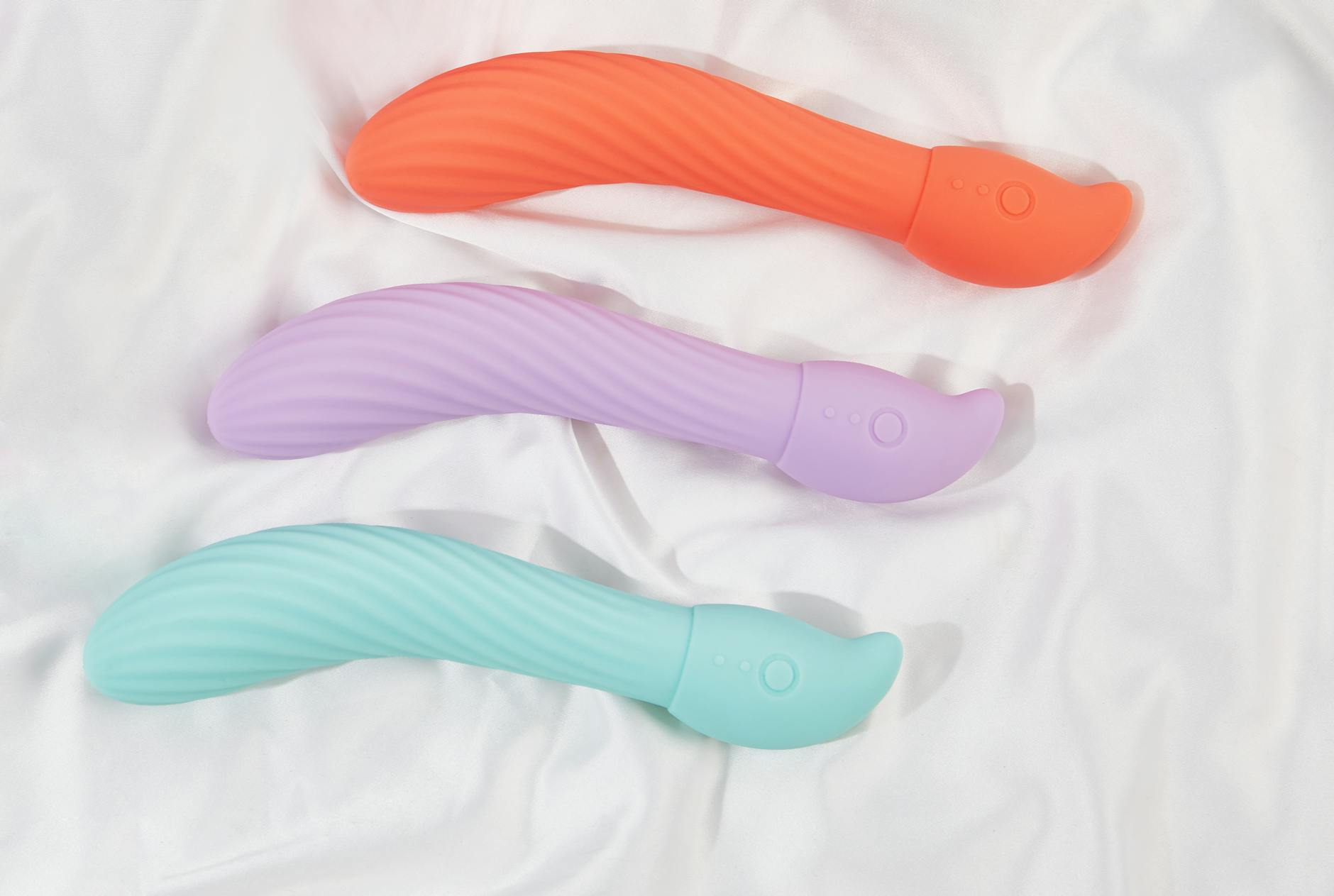
How to Rebuild Arousal with a Lemon Vibrator in Long-Term Relationships
Let's be real. After five, ten, or twenty years together, arousal isn't the automatic spark it was in year one. That's not a failure. It's physics. Novelty fades, routine sets in, and your nervous system gets comfortable. Comfort is lovely for a lot of things. For desire, it's a slow dimmer switch.
The tricky part: most couples treat this dip like a personal rejection instead of what it actually is, a predictable stage that needs a different approach. And that approach often starts somewhere unexpected. A lemon vibrator. Not because your partner isn't enough (they probably are), but because your body needs permission to wake up differently.
Why long-term arousal actually flatlines
Here's what happens neurologically. In the first years of a relationship, dopamine spikes around novelty. Your brain is flooded with it. Every touch feels new. Every encounter carries unpredictability. Then the brain adapts. That dopamine plateau is called habituation, and it happens to everyone. It's not romantic failure. It's brain biology.
On top of that, most long-term couples fall into a predictable rhythm. Same position, same pace, same lead-up. Your nervous system learns the script so well that arousal stops climbing. The pathway to pleasure becomes automatic, which sounds good until you realize automatic arousal is also shallow arousal. You're not bored with your partner. You're bored with the lack of variation in how your body gets stimulated.
Add stress, kids, work, aging, or any of the thousand things that crowd a long-term life, and arousal doesn't just flatten. It goes missing entirely. Then resentment moves in, because one partner (usually the one expected to desire on cue) feels broken, and the other feels rejected. Both assumptions are wrong.
The arousal reset that actually works
The solution isn't more candles or date nights, though those don't hurt. It's interrupting the habituation pattern by introducing genuine novelty to your body's pleasure response. This is where a lemon clitoral vibrator comes in, and why air-suction technology matters more than you might think.
Traditional vibrators send stimulation into the tissue via vibration. Your body learns that pattern fast. Air-suction vibrators like the Lem work differently. They create a gentle suction and pulse pattern that feels less like a vibration and more like a novel sensation. Your nervous system doesn't have a script for it yet. That newness alone can jolt arousal awake.
But here's the real magic: introducing a lemon vibrator forces a conversation. It breaks the automatic script. Suddenly you're not just lying there hoping arousal shows up. You're actively choosing a new experience. That choice, that intentionality, is arousal's best accelerant.
Starting the conversation with your partner
If you're in a long-term partnership and considering a clitoral vibrator, the conversation matters more than the toy. This is where most couples stumble. One person quietly orders something online, hopes the other won't notice, and then shame or awkwardness ensures the whole thing becomes a non-conversation.
Instead, name the actual problem first. Not "I want a vibrator," but "Our sex life feels routine to me, and I want to fix it together." Make it a shared project, not a personal indictment. Then, if a lemon vibrator feels right, frame it as a tool for both of you. Your pleasure is his pleasure. Your arousal matters. That reframing shifts it from "she needs help" to "we're trying something new."
Many partners worry that introducing a vibrator means they're not enough. That's a myth rooted in insecurity, not reality. A lem vibrator isn't a replacement. It's a key that unlocks arousal that was already locked inside you. It gives you both access to a version of pleasure that's been waiting.
How air-suction changes the pleasure equation
If you've tried traditional vibrators before and found them okay but not transformative, an air-suction lemon clitoral vibrator works on completely different nerve pathways. The clitoris has roughly 8,000 nerve endings. Traditional vibration hits one set. Suction and pulsing hit another. For many people, especially those in long-term partnerships who've grown desensitized to one type of stimulation, suction feels shockingly different.
The other advantage: suction feels less intense than traditional vibration, which means you can use it longer without overstimulation. That extended window is where real arousal builds. Instead of a quick peak and crash, you get a sustained climb. That's the kind of arousal your nervous system hasn't experienced in years.
Rebuilding arousal as a practice, not an event
One lemon vibrator won't fix a long-term relationship. What it can do is open a door. Once you've used it a few times alone or together, your nervous system remembers that pleasure is still available. Arousal becomes something you can access again, not something that disappeared.
Then the real work begins, and it's not about the toy. It's about sustaining novelty. Vary where and when you have sex. Change positions. Build longer warm-up time. Let your partner watch you explore your own pleasure, which is weirdly arousing for both of you. Use the vibrator sometimes, not always. Predictability is the real kill switch for desire in long-term partnerships. Surprise is the cure.
Many couples in my practice find that introducing a lem vibrator doesn't just restore arousal. It restores conversation. Suddenly you're talking about pleasure, about what feels good, about what you both want. That vulnerability, that specificity, is where long-term intimacy actually gets rebuilt.
The emotional reset that comes with it
Here's what often surprises my clients: when arousal returns, other things shift too. You feel less resentful. You initiate touch more often. You feel sexier in your own body. Your partner feels desired again. The whole dynamic of the relationship softens because one of its foundational components, physical desire, stops feeling like a failure and starts feeling like a possibility again.
This isn't magic. It's permission. A lemon vibrator gives you permission to prioritize your arousal, to explore your own body, and to stop waiting for desire to show up on its own. That permission, that agency, is what actually rebuilds long-term arousal. The tool is just the excuse to start.
If your arousal has been flatlined and you're in a long-term partnership, don't assume it's gone forever. Don't assume your partner isn't attracted to you or that you're broken. Assume instead that your nervous system has learned the script too well, and it's time to write a new one. A lemon clitoral vibrator can be the first sentence.
FAQ: Rebuilding Arousal in Long-Term Relationships
How long does it take for a lemon vibrator to rebuild arousal?
It depends on the person and the relationship context. Some people notice increased interest within a few weeks of regular use. Others take longer to trust that their arousal is coming back. The timeline also depends on whether both partners are invested in the reconnection work. If it's a solo project and the other partner feels excluded, it'll take longer. If you're exploring together and having the conversations that go with it, arousal often returns within a month or two.
Can a lemon clitoral vibrator hurt arousal if I use it too much?
Yes, if you substitute it for all other stimulation. The goal isn't to become dependent on the vibrator. It's to use it as a tool that reminds your nervous system that arousal is possible, then branch out from there. I typically suggest using a lemon vibrator 2 to 3 times per week, then mixing in unassisted sex so your body doesn't re-habituate to the new sensation. Variety stays the key.
What if my partner feels threatened by a lemon sucker vibrator?
Talk about the actual fear underneath. Usually it's one of three things: they feel replaced, they feel inadequate, or they feel like the relationship is so broken that drastic measures are needed. Each one needs a different conversation. The first needs reassurance that you still want them. The second needs clarity that your pleasure isn't a reflection on their desirability. The third needs honesty about whether you're both actually committed to fixing things. A vibrator doesn't address any of those. The conversation does.
Is an air-suction lemon vibrator better than a traditional vibrator for long-term couples?
For many people, yes, because it offers a genuinely novel sensation. If you've been using traditional vibration for years, air-suction feels different enough to interrupt habituation. That said, the "best" vibrator is the one that feels good to your body and that you and your partner feel comfortable with. Some couples prefer traditional vibration. Others love suction. Try to approach it with curiosity rather than as a fix-all.
Can we use a lemon vibrator together, or should I use it alone first?
There's no rule. Some couples feel more comfortable with solo exploration first, so you can get comfortable with the sensation without pressure. Others find that using it together from the start makes it less of a secret tool and more of a shared experience. I lean toward trying it together, even if just watching, because it keeps the vulnerability and communication in the foreground. But what matters most is what feels right for both of you.
What if arousal still doesn't return after trying a lemon clitoral vibrator?
If you've given it an honest try for a few months and arousal isn't budging, the issue might go deeper than habituation. Depression, anxiety, hormonal shifts, unresolved relationship conflict, or past trauma can all suppress desire independent of what toy you introduce. That's when talking to a therapist who specializes in sexual issues or couples work becomes valuable. A lemon vibrator is a great first intervention, but it's not the answer for every arousal flatline. Sometimes the work is relational, not physical. And that work is worth doing.
References
Gottman, J. M., & Silver, N. (2015). The seven principles for making marriage work: A practical guide from America's foremost relationship expert. Harmony.
Meston, C. M., & Frohlich, P. F. (2000). The neurobiology of sexual function. Archives of General Psychiatry, 57(11), 1012-1030.
Voon, V., Mole, T. B., Banca, P., et al. (2014). Neural correlates of sexual cue reactivity in individuals with and without compulsive sexual behaviours. PLOS ONE, 9(7), e102419.
Kaplan, H. S. (1995). The sexual desire disorders: Dysfunctional regulation of sexual motivation. Brunner/Mazel.
Perel, E. (2018). Mating in captivity: Unlocking erotic intelligence. Harper Paperbacks.