
Here's what nobody tells you about desire after years together
Stress doesn't just kill your mood for a night. When it's chronic, relentless, and tied to actual responsibilities, it can flatline your libido for months or years. You're not broken. You're not less attracted to your partner. You're running on fumes, and your nervous system is treating sex like a luxury you can't afford.
The problem is, most couples wait until the drought is absolute before they try anything. They wait until resentment piles up. Then they either white-knuckle their way through obligatory sex or stop trying altogether. Both paths lead nowhere good.
Here's what actually works: starting small, removing pressure entirely, and using a tool that makes pleasure feel accessible again. A lemon vibrator designed for clitoral stimulation can be that tool. But only if you use it right as a couple.
Why stress tanks desire in long-term relationships
When I work with couples in this exact spot, the first thing I explain is the biology. Your nervous system doesn't care that you love your partner. When you're operating in chronic stress, your body is flooded with cortisol. That cortisol literally suppresses the neural pathways that activate desire. Sex starts to feel like another task, another demand on your already-depleted body.
Add to that the emotional layer. After months of logistical planning, work deadlines, and parenting decisions made without much conversation, sex starts to feel like you're going through the motions with a roommate instead of a partner. The intimacy erodes first. The desire follows.
Most couples think the solution is "we need to have more sex." Wrong. The solution is "we need to rebuild the feeling of being chosen by each other." Sex follows from that feeling. It doesn't create it.
The setup: removing all the pressure first
Before you even think about using a lemon vibrator together, you need one conversation. Not a heavy one. Just clear.
Say something like: "I miss us. And I don't want either of us to feel obligated. So here's what I'm thinking. What if we set a specific time once a week where we just focus on pleasure? No performance. No expectation of intercourse. Just exploring what feels good, together."
That specificity matters. "Let's try to be more intimate" is too vague and puts pressure on both of you. "This Saturday at 8 p.m., after the kids are down, we're blocking an hour for just us" removes the daily negotiation. It tells your nervous system this is happening, so you can actually relax into it.
The second thing to agree on: curiosity without judgment. If something feels awkward, weird, or not sexy, that's data, not failure. You're rebuilding. That takes honesty.
How to introduce a lemon clitoral vibrator without making it weird
Don't spring it on your partner. Have a conversation that sounds like this:
"I've been reading about how clitoral vibrators can actually help couples reconnect because they take the pressure off one person to perform. I'm interested in trying one together. What do you think?"
Then listen. If they're hesitant, don't oversell it. Ask what the hesitation is. Sometimes it's about feeling replaced. Sometimes it's about not knowing what to do. Address the actual concern, not the objection.
If they're open, explore it together before you're naked. Look at the options. The Lem, for instance, uses gentle air-suction stimulation instead of traditional vibration, which a lot of couples find less jarring and more connected to touch. Watching the design, reading about how it works, handling it before you use it takes away the strangeness.
The first time using it together: the play-by-play
Set the scene in whatever way helps you both relax. That might be candles and music. It might be just locking the door and telling your phone to do not disturb. Whatever signals to your body that this is different from a regular Tuesday.
Start with clothes on. Seriously. Kiss for five minutes. Touch each other the way you used to. Let arousal actually build. This isn't a race to the vibrator. The vibrator is the accent, not the whole song.
When someone in the couple feels ready, introduce the lemon vibrator slowly. If the receiving partner is someone with a clitoris, start on a low setting. The whole point is to rebuild the feeling that pleasure is accessible, not that you need to be in peak arousal for it to work.
Here's the key difference from using a vibrator alone: the partner not using the vibrator stays engaged. Touch their body. Kiss their neck. Make eye contact. The vibrator isn't replacing you. It's an addition to you. That distinction is everything for couples rebuilding connection.
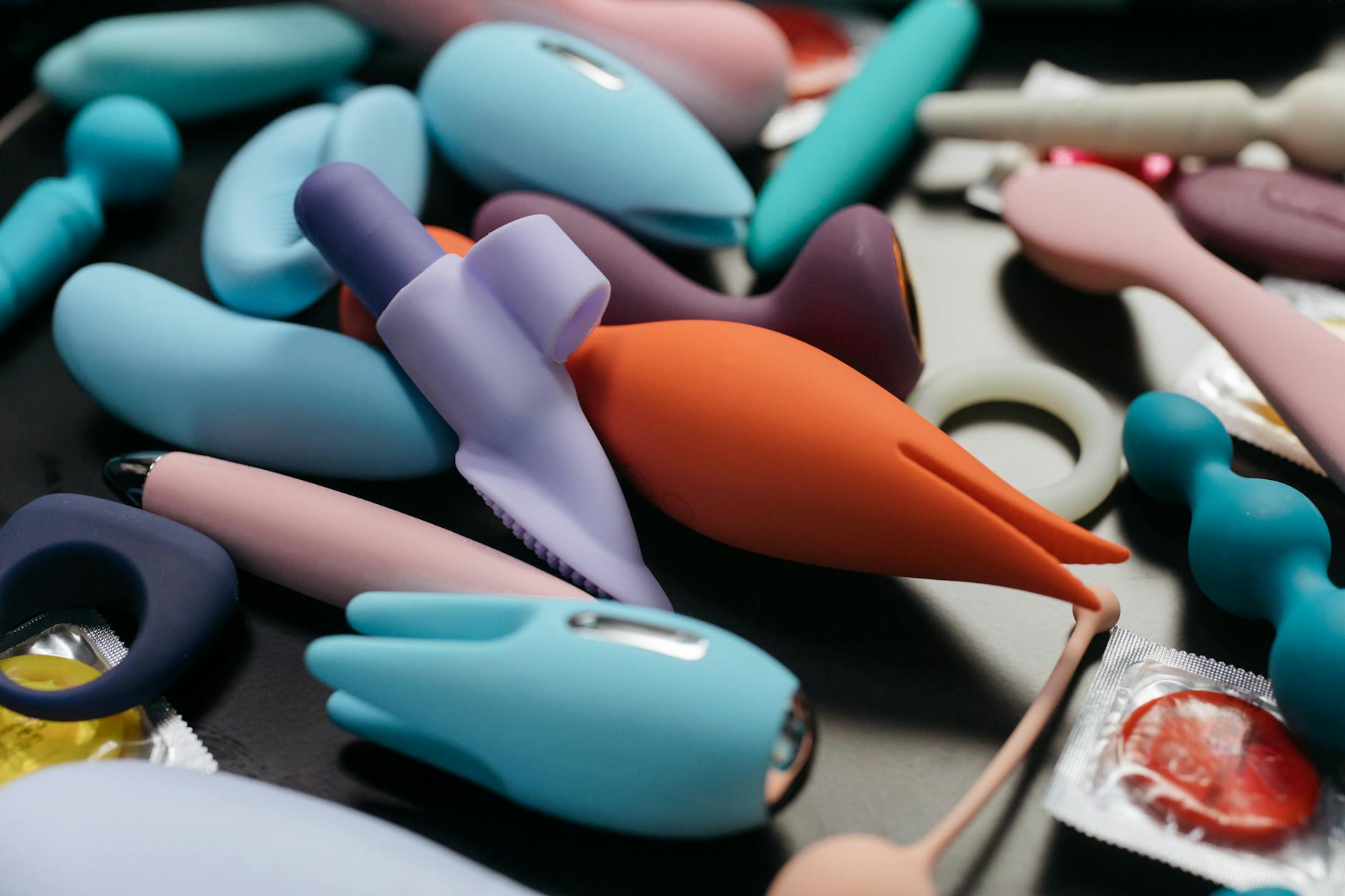
Photo by cottonbro studio on Pexels
Let the experience unfold without a destination. You don't have to reach orgasm. That goal-oriented thinking is what killed your sex drive in the first place. If one person comes, great. If you both just spend 20 minutes touching and exploring and remembering what it feels like to prioritize each other's pleasure, that's the win.
How often to revisit this (and how to keep it from becoming routine)
Once a week is the minimum threshold where couples actually rebuild sexual connection. Less than that, and you're just maintaining the status quo. Once a month, and you're fighting an uphill battle.
But here's the trap: after three months of weekly time together, it starts to feel routine again. You need micro-variations. One week, take turns. One week, introduce a lubricant you've never used. One week, try a different room or a different time of day. One week, use the vibrator in a completely new way.
The consistency matters. The novelty within that consistency prevents it from becoming another obligation.
When to involve conversation, and when to just be quiet
After the first few times, some couples find it helpful to talk about what worked. "I loved when you touched my back while I used the vibrator." That feedback loop actually deepens connection. It says, "I was paying attention to what made you feel good."
Other couples find that talking about it kills the mood. They prefer to let the pleasure speak for itself. Both are fine. The only rule is you both have to agree on which style works for you.
One thing that nearly always helps: checking in the next morning or later that day. "Last night was really good. I felt close to you." That reinforces the emotional work underneath the physical act.
The emotional shift that usually happens
After four or five weeks of consistent, pressure-free time together with a lemon vibrator designed for shared use, something shifts. You start thinking about each other differently. You remember that your partner is someone who brings you pleasure. That they chose to show up. That you're allowed to want them.
That emotional opening often spills into the rest of your week. You're kinder to each other. You text more. You laugh more easily. The sex stops being a separate problem and becomes part of a reconnected relationship.
I've seen couples go from months of zero sexual contact to twice-weekly intimacy just by removing judgment and adding a tool that makes pleasure feel doable again. The lemon vibrator isn't magic. Showing up consistently and removing pressure is.
When to get extra help
If after six weeks of consistent, pressure-free time together you're still feeling completely disconnected, that's a sign to work with a couples therapist. Sometimes the stress is really about unresolved conflict or unmet emotional needs. A vibrator can't fix that. Only real conversation can.
Similarly, if one partner is interested and the other is genuinely resistant, that gap matters. It's not about the vibrator. It's about whatever the resistance is pointing to. That's worth exploring with someone trained to help.
But in most cases, when stress has just buried your libido under logistics and exhaustion, this approach works. Consistency. Permission. Pleasure. Connection follows.
FAQ: Using a Lemon Vibrator as a Couple
How do I talk to my partner about wanting to use a vibrator together without hurting their feelings?
Frame it as something you want to experience together, not something one of you is lacking. "I've been thinking about ways to reconnect, and I'm curious about trying this" is very different from "I need this to enjoy sex with you." The first invites exploration. The second triggers defensiveness. Also, do this conversation outside the bedroom, when you're both calm and not in a sexual moment.
Can a lemon clitoral vibrator actually bring couples closer, or is that wishful thinking?
It depends entirely on the context. If you're using it to avoid actual conversation about disconnection, it won't help. If you're using it as a tool within a commitment to rebuild closeness, it genuinely can. The vibrator isn't doing the work. Your willingness to prioritize each other's pleasure is. The vibrator just makes that priority feel less awkward and more accessible.
What if my partner wants to use the vibrator on me but I feel self-conscious?
Start with lower intensity and more clothing. You don't have to be fully naked to build comfort. Also, remember that self-consciousness during sex is almost always about feeling observed rather than about the actual sensation. Dimmer lighting, keeping your eyes closed, or even using the vibrator without direct eye contact first can help you relax into it. Your nervous system needs time to learn that this is safe.
How long should we plan for when we're using a lemon vibrator together?
Budget 30 to 45 minutes minimum. That includes time to reconnect without the vibrator first, time to explore with it, and time to just be together after. If you're squeezing it into 15 minutes before bed when you're both exhausted, it's going to feel like another task. The time investment signals to your nervous system that this actually matters.
Is it normal for the person using the vibrator to feel disconnected from their partner?
It can be, especially the first time. That's why the partner who isn't directly using the vibrator needs to stay very engaged. Touch, kiss, talk. Make it about closeness first and the vibrator second. If after multiple times it still feels isolating, you might try taking turns using it on each other rather than exploring solo pleasure together. Different couples find different rhythms.
What if we use the vibrator together but nothing changes between us?
Then the disconnection runs deeper than stress and depleted desire. You might benefit from talking with a couples counselor about what's actually creating distance. Sometimes it's mismatched values around money or parenting. Sometimes it's unprocessed hurt. Those conversations can be uncomfortable, but they're where real reconnection starts.
The bottom line
Life stress is a legitimate libido killer. You're not failing. Your relationship isn't broken. You just need a reset. Using a lemon vibrator together works because it removes shame, makes pleasure feel doable, and puts you back in the practice of prioritizing each other. That practice rebuilds the intimacy that desire grows from.
If you're ready to try this, start with the conversation. Set the time. Show up without judgment. Everything else follows from there. Need more support planning this conversation with your partner? Let's talk.