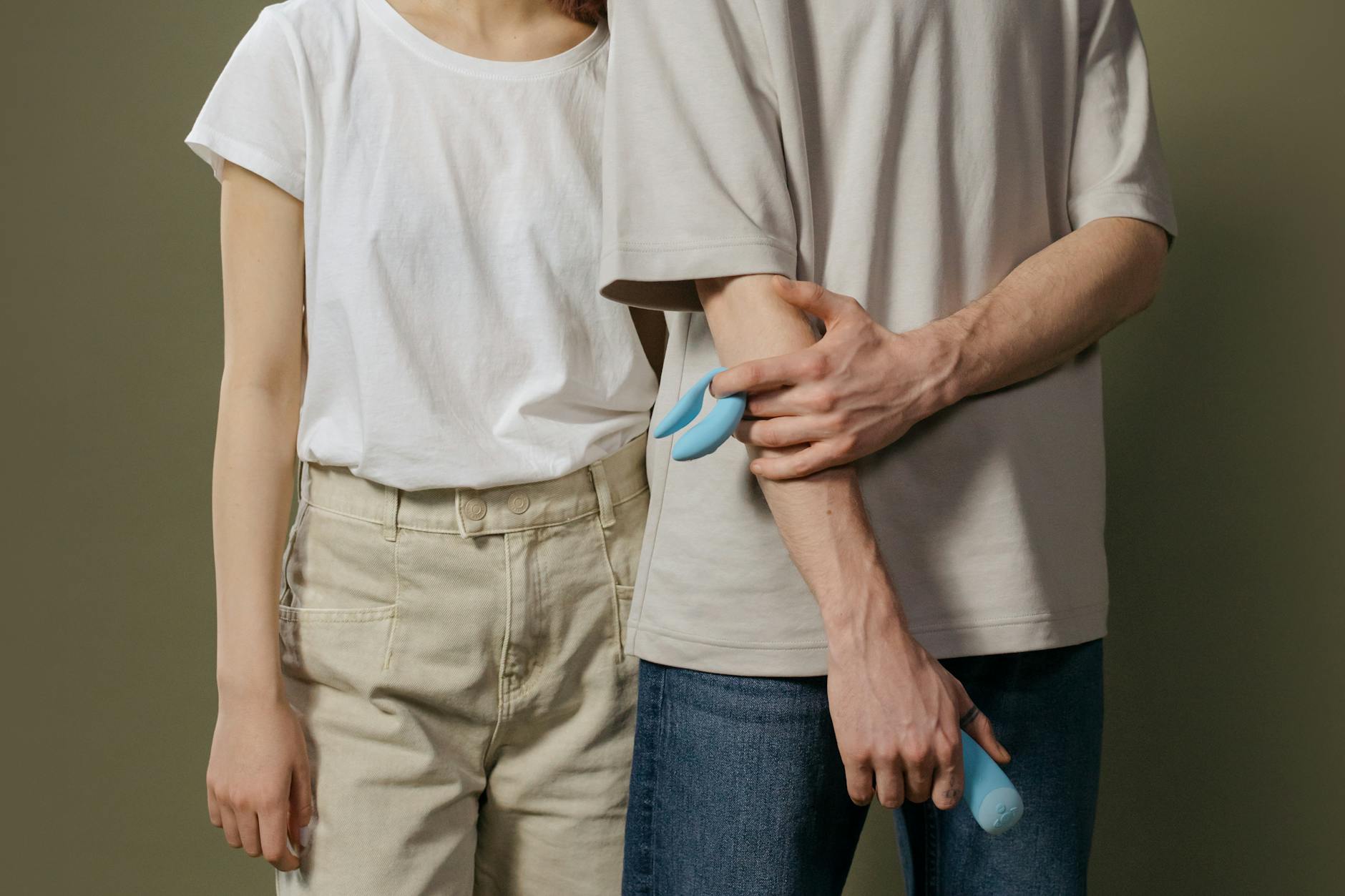
Let's name the elephant in the room first
After months or years of separation, physical reconnection feels like showing up to a first date with someone you've known forever. The awkwardness isn't about desire. It's about the gap. Whether you've been long-distance, managing a health crisis, navigating a rough emotional patch, or simply let life pile up between you and your partner, that silence creates friction that sex alone can't fix.
Here's what matters: introducing a lemon vibrator or other clitoral vibrators into this specific moment isn't about novelty or fixing what's broken. It's about lowering the stakes.
Why physical reconnection after separation is neurologically hard
Your nervous system remembers the absence. After months of not touching, your body doesn't just pick up where it left off. There's anticipatory anxiety (will this feel good?), comparison anxiety (did it used to feel better?), and performance anxiety (am I supposed to want this immediately?). None of that is about desire. All of it is about safety.
A lemon sucker or clitoral vibrator does something ordinary sex often can't do at this stage. It shifts the focus from the relationship back to sensation. Your partner becomes a facilitator of your pleasure rather than the source of it, which sounds small until you're actually in the moment. That distinction defuses the pressure cooker.
Start with conversation, not the device
I've worked with dozens of couples rebuilding after separation, and every successful restart included one awkward five-minute conversation first. Not during sex. Not in bed. Over coffee or a walk.
The conversation has three parts.
First, name it: "Our physical connection got interrupted, and restarting feels weird. I want to fix that, and I think we should make it easier on ourselves."
Second, reframe the goal: "This isn't about proving we're still attracted. It's about curiosity and sensation. Low pressure, high play."
Third, introduce the idea: "I've been thinking about using a lemon vibrator when we reconnect. Not because anything is wrong, but because it might help us both relax and focus on what feels good right now."
That conversation does the heavy lifting before clothes come off. It transforms a lemon clitoral vibrator from a potential minefield of meaning into a neutral tool.
The first time using a lemon vibrator together after separation
Timing matters. Don't plan this for the first sexual encounter after reconnection. Plan it for the second or third. Let one exploratory experience happen first without toys. Then come back to the lemon vibrator when you both know the baseline.
Here's the actual framework:
Set the scene without ceremony. No candles, no music orchestrated to build tension. That's theater. Instead, choose a time when you're both genuinely relaxed. Post-dinner. Weekend morning. Not tired, not rushed. Comfortable clothes. Some privacy. That's the whole list.
Start with touch first. Forget the device for the first 10-15 minutes. Hands only. Kissing, caressing, slow undressing. This does two crucial things. It reminds both bodies what you like about each other, and it wakes up the nervous system without demanding instant intensity.
Introduce the lem vibrator as a question, not a command. "I want to try this together. Want to see how it feels?" is fundamentally different from just turning it on. Your partner has agency. They can change their mind. That permission matters neurologically.
Start on the lowest setting. Habit creeps in here. Because you're nervous, you might turn a lemon vibrator up to setting three or four. Don't. Start at one. Your partner's clitoris is more sensitive after months of minimal stimulation. What felt perfect six months ago might feel intense now.
Let your partner guide the rhythm. This is where couples often slip back into old patterns. One person leads. The other follows. Instead, hand control to the person receiving pleasure. They set the pace, the pressure, the movement. Your job is to hold the device and maybe use your other hand to touch them elsewhere. That's it.
What happens if it feels awkward
It probably will at first. Awkwardness after separation is normal. It doesn't mean the lemon vibrator is the problem or that you've made a mistake.
If your partner seems uncomfortable, pause. Not permanently, but right then. Ask what would help. Sometimes the answer is "I need more time." Sometimes it's "Can we dim the light?" Sometimes it's "Let's slow down." All of those are fine.
If you feel awkward watching your partner with the device, that's also normal. You're witnessing pleasure that isn't directed at you, which can feel exclusionary if you're not ready for it. That's not a reflection of your attraction or your relationship. It's just a new thing.
The lemon clitoral vibrator is a tool for her (or them) to experience sensation in a context where the relationship has been rebuilt just enough to hold that. It's not about you. That distinction is freedom for both of you.
The psychological shift that happens when it works
Couples who successfully use a lemon sucker or lem vibrator during reconnection often report the same thing. The first time feels like logistics. By the second or third time, the logistics disappear. Your partner relaxes. Their nervous system learns that touch is safe again. Your nervous system learns that you can be in pleasure together without it being about the relationship drama that created the separation in the first place.
That's the real work. Not the vibrator. The vibrator just makes the work easier.
Moving forward: lemon vibrators as part of your new rhythm
After separation, many couples worry they need to recreate the old version of their intimate life to prove it's still alive. They don't. This is a chance to build something new.
Some couples discover that using a lemon vibrator together becomes a regular part of their intimacy. Others use it occasionally. Some keep it for moments when connection feels stalled. There's no one way it's supposed to work. What matters is that you've reestablished touch without the weight of expectation.
If anxiety shows up again down the road (and sometimes it does), you have a map. You know that slowing down works. You know that sensation-focused tools remove pressure. You know that conversation before clothes come off changes everything.
FAQ: Physical reconnection and lemon vibrators
What if my partner is embarrassed about using a clitoral vibrator?
Embarrassment often masks anxiety about reconnection itself. The vibrator becomes the proxy for the real concern, which is usually "Will this work?" or "Am I still desirable?" Go back to the conversation. Separate the tool from the relationship question. A lemon vibrator isn't a referendum on attractiveness. It's a permission slip to focus on sensation when the nervous system is still learning to trust.
How long should we wait after separation before trying a lemon clitoral vibrator?
There's no exact timeline, but I'd suggest waiting until you've had at least one sexual encounter without any toys. You need a baseline. Then introduce the lem vibrator when you're both ready to experiment, not when you're desperate to prove the relationship still works.
Can we use a lemon vibrator if we're not sure the separation is permanent?
Yes, but approach it differently. If you're in a trial reconnection phase, keep things simple. A clitoral vibrator doesn't require the same emotional investment as, say, planning a future together. It's just about pleasure in the present moment. That's actually lower stakes than you think.
What if we're just starting to explore toys together for the first time during reconnection?
You're not alone. Many couples introduce toys during high-stakes moments like this because the pressure creates permission. Lowkey, a lemon sucker or lem vibrator is easier to normalize than other toys because the design is less intimidating. Start simple. Let the tool prove itself before adding complexity.
Should both partners use the lemon vibrator on each other?
Not necessarily. After separation, the asymmetry is actually helpful. One person receives focus. That receiving becomes an act of trust. Later, you can explore mutual pleasure. Right now, taking turns might actually create more pressure. Keep it simple.
How do we talk about what happens if nothing feels good the first time?
Before you even start, agree that one attempt isn't a verdict. Your body is remembering how to be touched. Your nervous system is rebuilding trust. Sensation changes. Desire changes. A lemon clitoral vibrator is one tool in a larger conversation, not a magic fix. If it doesn't click the first time, try again in a week. Or don't. There's no deadline.
The real work is the reconnection, not the toy
A lemon vibrator is a permission structure. It says, "We're going to focus on sensation together, without the weight of fixing the relationship right now." That's powerful. But it's not the power of the toy itself. It's the power of choosing to be curious about each other again.
After separation, physical reconnection doesn't happen because you want it to. It happens because you create the conditions for it. Conversation. Patience. A willingness to feel awkward. A device that lowers the stakes on performance. These pieces together rebuild the safety that physical intimacy requires.
Your body remembers how to want your partner. You just have to be patient while it remembers.