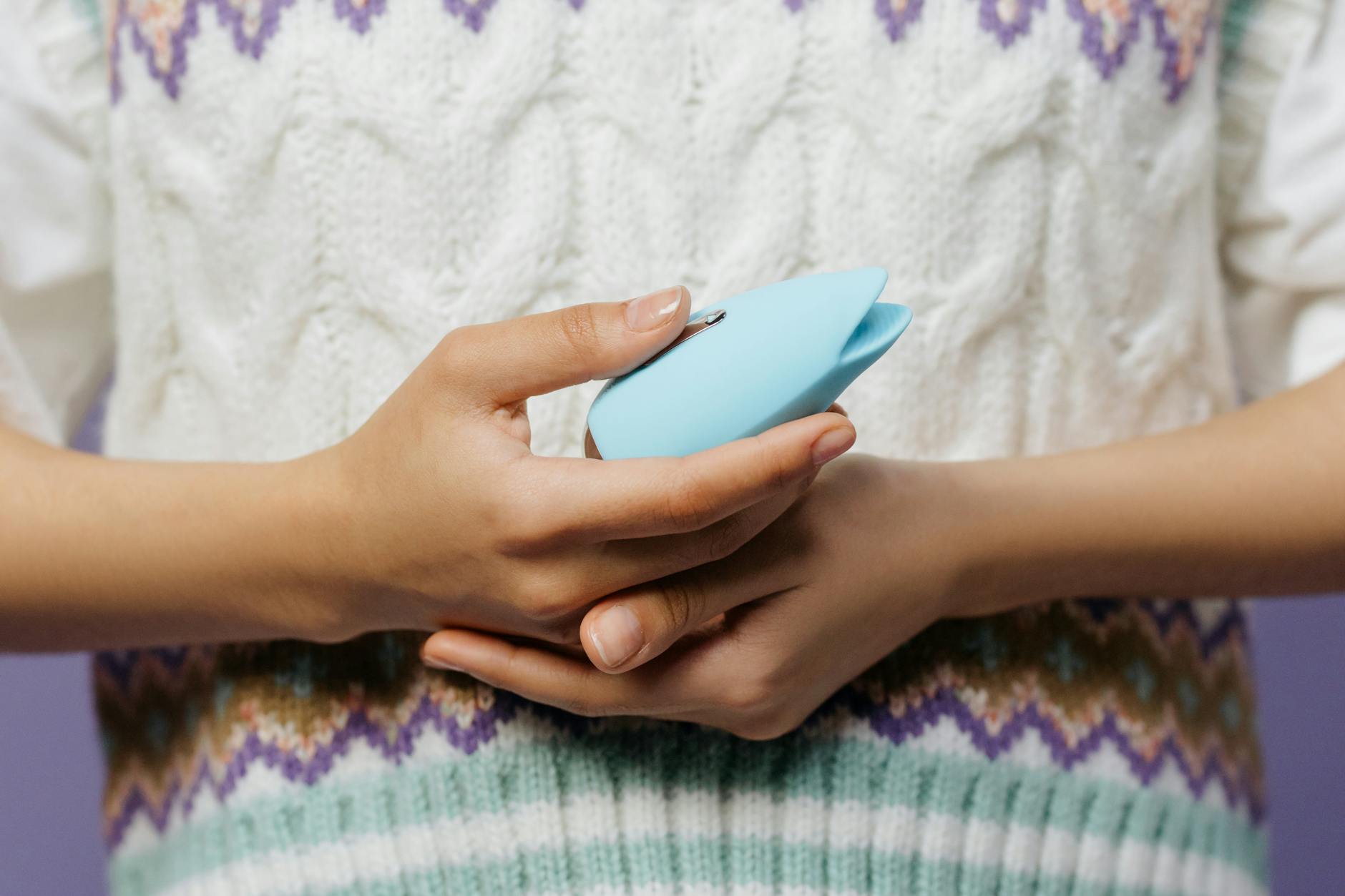
Here's what no one tells you about penetration pain
Penetration pain is common. Full stop. Whether it's from vulvodynia, endometriosis, vaginismus, scar tissue, hormonal shifts, or just tension you're holding in your pelvic floor, the fact that it happens doesn't make you broken. What it does mean is that the standard blueprint for sex doesn't work for your body right now. And honestly? That's the moment things get better, not worse.
Because the moment you stop forcing penetration and start exploring what actually feels good, you often discover sensations way more reliable than what you were chasing before. That's where lemon vibrators come in. They're the workaround that turns out to be better than the original plan.
Why lemon clitoral vibrators bypass the pain entirely
Let's be anatomically clear: the clitoris has more nerve endings than the vaginal canal. Like, exponentially more. The suction mechanism that lemon vibrators use stimulates those nerves without requiring any vaginal penetration at all. You get full-body sensation, intense orgasms, and zero friction on the tissue that hurts. This isn't a consolation prize. For a lot of people, it's the first time they've felt fully satisfied.
The design of lemon suction toys specifically matters here. Unlike traditional vibrators that rely on rapid motion against sensitive tissue, suction creates a gentle pulse that builds sensation gradually. Think of it less as friction and more as a rhythm. Your body can relax into that rhythm instead of bracing against pressure.
If you've had penetration pain for months or years, your pelvic floor muscles have likely learned to clench defensively. That clenching makes everything worse. Lemon vibrators work with your relaxation, not against your tension.
The practical setup that actually works
Here's what I recommend to clients dealing with penetration pain:
Start in a position where you feel safe and supported. Lying back, sitting up, whatever gives you control and lets you relax your lower belly. Penetration pain often links to anxiety, so your nervous system needs to feel like it can opt out at any second. If you're braced for pain, you won't feel much of anything else.
Use a water-based lubricant on the external area. Even though lemon vibrators don't require lubrication to function, a little external lubrication can reduce any friction sensation on already-tender skin and make the experience feel more comfortable overall. Think of it as permission for your body to soften.
Start at the lowest suction setting. Patterns 1 or 2 on the Lem vibrator give you time to adjust. Your nervous system needs to relearn that sensation can build without pain. Rushing to high intensity defeats the whole point.
Breathe intentionally. This sounds hokey but it works. A tense pelvic floor correlates directly with shallow breathing. If you're holding your breath, you're holding tension. Focus on slow exhales. The orgasms that come from relaxation feel completely different than the ones that come from tension.
The emotional piece that changes everything
Penetration pain often arrives bundled with grief. Grief for the sex you thought you'd have. Grief for spontaneity. Grief for not being able to just enjoy your partner without thinking about your body.
Let that grief exist without trying to solve it in the same session where you're exploring pleasure. They're separate conversations. One is "I'm mourning what I lost." The other is "I'm discovering what works now." Both are valid. They're just not the same thing.
When you use lemon clitoral vibrators for the first time after months of pain, you might feel relief. You might also feel anger that you didn't try this sooner. You might feel disconnected from the pleasure because your brain has been primed for pain. That's normal. Your nervous system needs time to reset the expectation from "this will hurt" to "this feels good."
How to involve a partner, if that's part of your life
If you have a partner, the conversation isn't "I want to stop having penetrative sex." It's "I want to explore what actually works for my body right now." Those sound similar. They're not.
One frames it as loss. The other frames it as discovery. Your partner can absolutely be part of that discovery. They can hold the toy. They can use it on you. They can be present while you explore solo. The key is separating the conversation about your body (medical, practical) from the conversation about your connection (emotional, intimate).
Most partners, when given clear information and agency, show up differently. And honestly, a lot of couples discover they like partnered use of lemon vibrators better than penetration anyway. The focus shifts from performance to sensation. That's a fundamentally different experience.
When to see a specialist alongside using lemon vibrators
Lemon vibrators are a tool, not a treatment. If penetration pain has been present for more than a few months, talking to a pelvic floor physical therapist is worth doing. They can assess whether your pain links to muscle tension, scar tissue, or something else entirely. Sometimes the issue is pure tension that resolves with breathing work and relaxation. Sometimes it's structural and needs hands-on treatment.
A good pelvic floor PT will actually recommend external clitoral stimulation as part of your healing practice. They understand that pleasure and relaxation are therapeutic, not selfish.
If pain is sharp, burning, or shows up only with certain partners or certain times, a gynecologist trained in sexual medicine should be in the loop too. Conditions like vulvodynia or vaginismus need proper diagnosis. Using a lemon vibrator doesn't replace that assessment. It just gives you a way to experience pleasure while you're getting clarity on what's happening.
The orgasms that happen when you stop forcing
Here's the thing I notice in my practice: when people let go of the idea that "good sex" equals penetration, the orgasms change. They're often longer. They're sometimes more intense. They almost always feel more sustainable because you're not fighting your own body to get there.
Lemon clitoral vibrators are particularly good at this because the suction sensation allows for arousal to build very gradually. You're not rushing. There's no finish line where penetration has to happen. The entire arc of pleasure becomes the point instead of a means to something else.
Troubleshooting when nothing feels right yet
If you're using a lemon vibrator and feeling frustrated because nothing's clicking, here's what usually helps: slow down more. Not "a little slower." Much slower. Give yourself 20-30 minutes just exploring sensation at settings 1 and 2. Let your nervous system realize it's safe.
If even that feels too intense, external stimulation over underwear or a thin fabric is fine. The goal right now is pleasure, not orgasm. Let orgasm show up when it wants.
If you're still braced for pain, that's a sign you might benefit from some therapeutic support before diving deeper. A trauma-informed sex therapist or pelvic floor PT can help your nervous system reset faster.
FAQ
Can I use a lemon vibrator if I'm afraid of any genital touch?
Yes, but work with a pelvic floor physical therapist or sex therapist alongside it. Start with external stimulation over clothing if that feels safer. Lemon vibrators are designed to feel gentle, but healing from pain anxiety takes time and ideally professional support.
Will using a lemon vibrator make penetration pain worse?
No. Actually the opposite. Learning that your body can experience pleasure without pain helps reset your nervous system's threat detection. You're literally retraining your pelvic floor to relax instead of clench.
What if my partner wants penetration but I can't do it?
Having a clear conversation separate from any sexual context helps. "My body isn't available for that right now. Here's what I want to explore instead." If your partner refuses to adapt, that's relationship information worth paying attention to. A good partner meets you where your body actually is.
Are lemon clitoral vibrators safe if I have endometriosis or PCOS?
Yes. External clitoral stimulation doesn't aggravate endometriosis or PCOS. In fact, the relaxation response from pleasure can help manage pain overall. If you're in a flare, using the vibrator externally gives you options during times when your body feels particularly tender.
How long does it usually take to feel good again after penetration pain?
That depends on the cause and your nervous system's recovery timeline. Some people feel relief in a few weeks. Some take months. Using lemon vibrators regularly helps because you're building a new association with pleasure instead of only remembering pain.
Should I tell my doctor I'm using a vibrator?
Yes, if it's relevant to your treatment. If you're seeing a pelvic floor PT, mentioning that you're using external clitoral stimulation helps them understand your baseline. Most medical professionals trained in sexual medicine actively support this.
The reset you didn't know you needed
Penetration pain shifts something fundamental about how you relate to your own pleasure. It makes you rethink what you actually want instead of what you thought you were supposed to want. Lemon vibrators aren't a workaround because penetration failed. They're a redirect toward sensations that were always going to be more reliable for your specific nervous system.
Start slowly. Breathe. Let your body surprise you. And if it takes time, that's not failure. That's just your nervous system learning something new.