
Let's name what's actually happening
Health anxiety doesn't announce itself as health anxiety. It arrives disguised as "I don't feel like it tonight" or "Can we just cuddle?" or the slow, grinding silence where touch used to happen. One partner becomes hyperaware of their heartbeat, their breathing, whether that sensation is normal or a sign of something. The other partner watches the door close and doesn't know whether to push it open or wait.
Neither of you is broken. But the anxiety is real, and it's not going away because you ignore it or power through it.
Why health anxiety kills arousal
Arousal requires your nervous system to downshift from threat-detection into receptivity. Health anxiety does the opposite. It keeps your sympathetic nervous system on high alert, scanning your body for danger signals. You can't be turned on and terrified at the same time. The nervous system won't allow it.
When your partner is worried about their heart rate or whether that twinge means something serious, their body is locked in protective mode. Adding pressure ("we haven't had sex in months") doesn't unlock that mode. It reinforces it. The message they hear isn't "I want you." It's "You're failing me." Which, paradoxically, makes the anxiety worse.
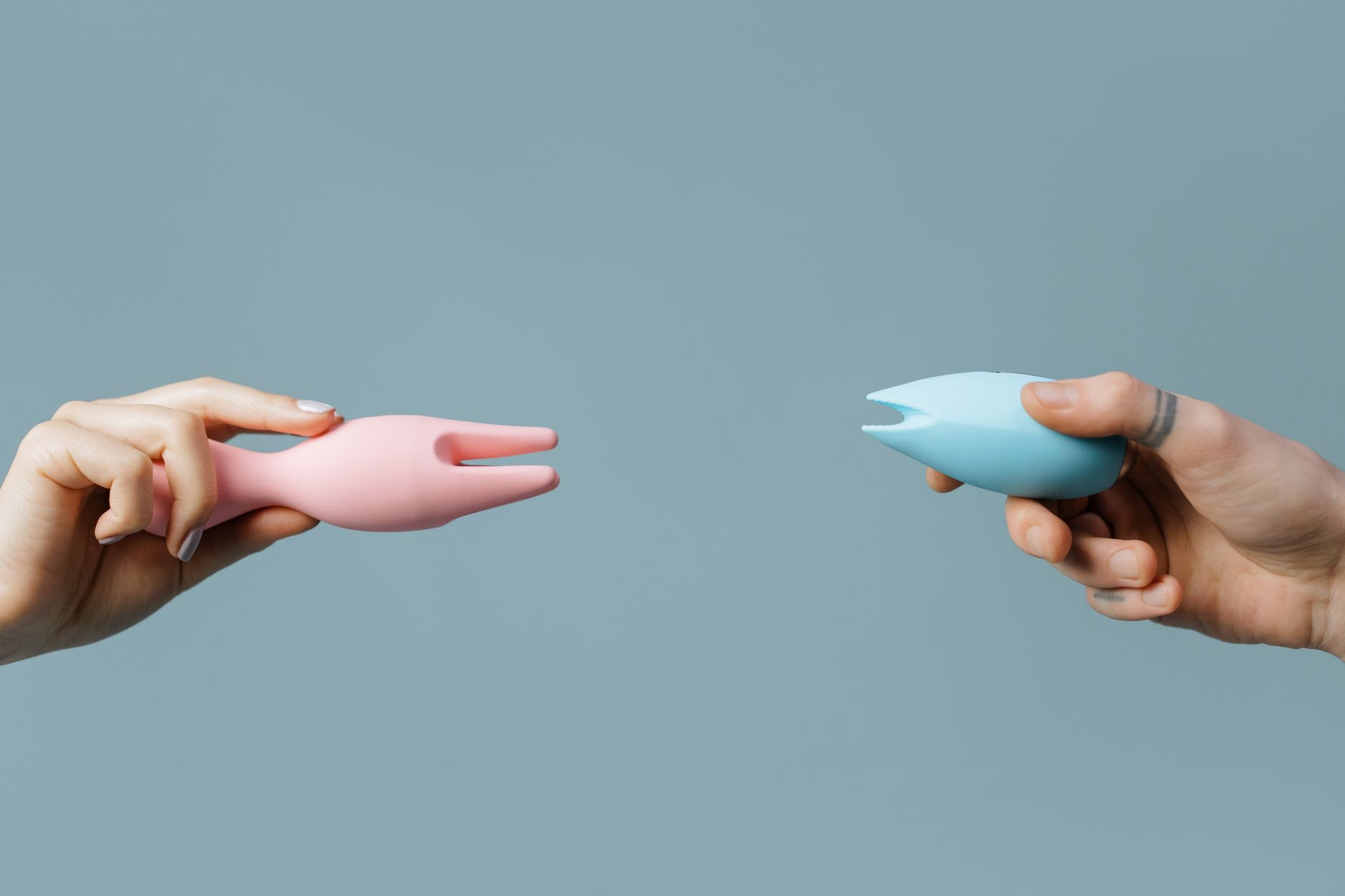
Photo by cottonbro studio on Pexels
The conversation that has to happen first
This is not a sex conversation. Don't start with the vibrator, the frequency, or what you're missing. Start here:
"I've noticed we're not connecting physically the way we used to, and I'm guessing that's connected to the anxiety you've been managing. I don't want to pressure you. I want to understand what's happening and figure out what actually helps."
Notice what's missing: blame, expectation, urgency. Notice what's present: curiosity, alliance, specificity.
Listen to the answer. Really listen. You might hear things like:
"I'm scared if I get my heart rate up, something bad will happen." "I'm embarrassed that I can't just relax like a normal person." "I don't want you to see me panicking." "I feel broken."
Each of these deserves its own response, not a rushed pivot into "Let's try this toy." The anxiety needs witnessing before it will soften.
What to actually say (and what to avoid)
What doesn't work:
"It's all in your head" (dismisses lived experience). "Don't worry about it" (intensifies shame). "Sex will help you relax" (turns intimacy into medicine). "Other people just push through" (invalidates the actual difficulty).
What does work:
"Your body is trying to protect you. That makes sense given what you've been through." "We can figure this out together. There's no timeline." "I love you whether or not we're having sex." "What would actually help you feel safer right now?"
These statements separate the anxiety from your partner's worth. They also separate sex from obligation.
Why a lemon clitoral vibrator might be part of the answer
A clitoral vibrator like the Lem works well here because it removes performance pressure. When anxiety is in the room, your partner is likely terrified of failing to get aroused or maintain arousal. The pressure amplifies the anxiety, which kills arousal, which creates more anxiety. It's a locked loop.
Using a vibrator together shifts the dynamic. The focus moves to sensation rather than performance. Arousal becomes something that happens to the body, not something your partner has to produce on command. That's neurologically powerful for someone whose nervous system is stuck in threat-detection.
Also, honestly? A lemon sucker-style vibrator is gentle. It doesn't require the kind of deep penetration or vigorous thrusting that sends anxious brains into overdrive calculating heart rate and blood pressure changes. Air-suction stimulation feels novel and specific in ways that can actually interrupt the anxiety loop if done right.
How to introduce the idea without triggering more shame
Don't present it as a solution to their broken arousal. Frame it as exploration you want to do together.
"I found this article about how vibrators can help people feel sensation differently. I'm curious if it's something you'd want to explore when you're ready."
Or: "I miss touching you. I'm wondering if there's a way we could start small, with less pressure, and see what feels good."
Notice neither of these frames the vibrator as fixing them. It's presented as something you're choosing together, with curiosity rather than prescription.
The actual process: before, during, after
Before anything happens, agree on a pause signal. Not a safe word that feels clinical, but something simple like "hold on" or a hand gesture. Your partner needs absolute trust that they can stop instantly without explanation, judgment, or disappointment.
Start fully clothed. Spend time just touching, kissing, talking. Let arousal build naturally without the vibrator. This is not wasted time. This is nervous system recalibration.
When it feels right (and only if it feels right), introduce the vibrator. Start at the lowest setting. Keep communication open: "Does this feel good?" "Want more pressure or less?" "Should we pause?"
After, don't immediately jump into post-sex. Stay close. Let your partner's nervous system fully downshift. Talk about what felt good, what didn't. Normalize the fact that arousal might have peaks and valleys. That's not failure.
What changes over time
This isn't a quick fix. Health anxiety doesn't dissolve because you had one good experience. But what shifts is the relationship to the anxiety. Your partner starts to notice they survived arousal. Their heart rate went up, and nothing bad happened. That's big information for an anxious nervous system.
Meanwhile, you're no longer in resentment. You're in patient alliance. That's when real reconnection happens.
When to bring in outside help
If the anxiety is severe, if your partner is having panic attacks, if this is affecting their everyday functioning beyond just sex, therapy is worth exploring. A therapist trained in anxiety and somatic work can help your partner retrain their nervous system much faster than you can alone.
That doesn't mean you've failed. It means you've both recognized this is bigger than the bedroom. That's wisdom.
One more thing
Your desire matters too. You're not selfish for missing physical connection. But you're not responsible for fixing your partner's anxiety either. The best thing you can do is stay present, stay curious, and stay willing to rebuild this together. That combination alone changes the conversation in the room.
People also ask
Can health anxiety actually kill sexual desire?
Yes. When your nervous system is in threat-detection mode, it downregulates arousal systems. Your body is literally prioritizing survival over pleasure. That's not a choice or a character flaw. It's neurobiology. The good news is that nervous systems can retrain themselves, especially with patient, repeated safe experiences.
Is using a vibrator going to make my partner's anxiety worse?
Not if you introduce it thoughtfully. The risk is if you frame it as "This will fix you" or present it without consent. But if you approach it as gentle exploration you're doing together, with lots of pause moments and communication, it often helps by interrupting the anxiety loop and introducing new sensation.
How long before health anxiety stops affecting our sex life?
It depends on the severity of the anxiety and what your partner is doing to manage it. Some people shift noticeably within weeks. Others take months. Progress rarely looks linear. You'll have good days and setback days. That's normal.
Should I stop initiating sex entirely?
No. But initiate gently. Initiate with low pressure. Initiate with "I'd love to spend time close to you" rather than "I need you to have sex with me." The goal is rebuilding safety, not eliminating desire.
What if my partner refuses to use a vibrator or get help?
That's a different conversation, and it's about willingness to work on the relationship, not about sex itself. You might benefit from couples counseling to explore what's underneath that refusal. Sometimes it's shame. Sometimes it's avoidance. Sometimes it's something else entirely. A therapist can help you both understand it.
Can we still have a healthy sexual relationship if my partner has ongoing health anxiety?
Absolutely. Plenty of couples navigate this successfully. The key is separating the anxiety from the person, building lots of safety and communication, and releasing the idea that sex has to look a certain way. When you stop chasing the fantasy version of your sex life and get curious about what's actually possible right now, that's often when real intimacy returns.
The real work
Using a lemon clitoral vibrator with a partner who has health anxiety isn't about the toy. It's about rebuilding trust in your body's safety and trust in each other. The vibrator is just the vehicle. The real work is the conversation, the patience, and the willingness to redefine what connection means while your partner's nervous system is healing.
That's not easy work. But it's the kind that actually rebuilds relationships.