Here's the thing about performing
You're not actually having sex. You're acting the part of someone having sex while monitoring your partner's satisfaction, timing your responses, and managing their expectations about how loud you should be or how quickly you should orgasm. It's exhausting. It kills arousal. And it's more common than you'd think.
The performance trap usually starts small. Early in a relationship, there's a natural element of wanting to please, to show up well. But somewhere between year two and whenever, that wanting-to-please calcifies into a script. You know your lines. You know which sounds register as authentic versus try-hard. You know the exact angle and pace that will get him there fastest. And now you're stuck.
Here's what I see in my practice: people (mostly women, though not exclusively) who have spent years calibrating their pleasure around someone else's rhythm, and who've lost track of what their own pleasure actually feels like outside that performance framework.
Why this happens in relationships
It's not about your partner being selfish, necessarily. It's structural.
Most people (especially men) are socialized to believe that their partner's orgasm is their responsibility. So they're watching for signs. Are you getting there? Should they speed up? Did they mess up? This creates this weird feedback loop where you're managing their anxiety about managing your pleasure. And the easiest way to manage that anxiety is to perform satisfaction. Fake an orgasm or two, moan at the right moments, and everybody feels successful. Temporary peace.
But here's what doesn't happen: you don't actually find out what you want. You don't practice asking for it. And over months or years, the gap between the sex you're performing and the sex you actually desire gets wider and wider.
Then you stop wanting sex at all, which your partner reads as "something's wrong with the relationship" when what's actually wrong is that you've abandoned yourself in the relationship.
The lemon vibrator as a reset button
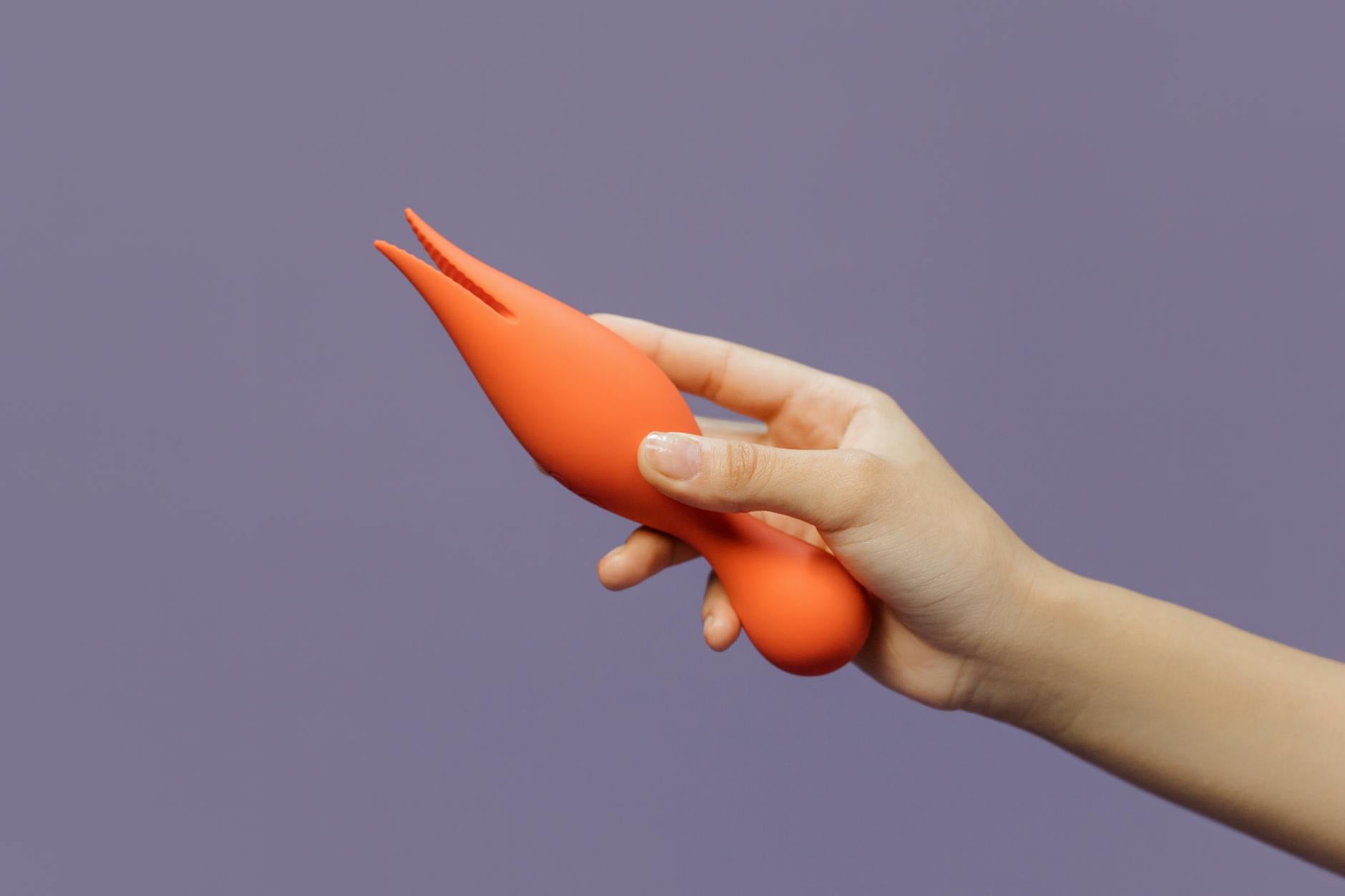
A lemon clitoral vibrator is not a solution to a bad relationship. But it is a tool for reclaiming your body as a source of genuine sensation instead of performance data.
Here's why it works so well for this specific friction: the lemon vibrator works independently of your partner's ego. It doesn't care if you take ten minutes or five seconds. It doesn't need you to perform recovery time between orgasms. It doesn't need you to look a certain way or make a certain sound. It's purely, radically about what feels good to you.
When you use a lemon clitoral vibrator solo, before you try anything partnered, you're doing two things at once. You're relearning what your body's actual response feels like, not your performed version. And you're building evidence that pleasure is possible outside the relationship dynamic. Both of those things are crucial.
The lem vibrator specifically is helpful here because the suction pattern creates a sensation that's so distinct, so clearly coming from the toy and not from a person, that there's no room to perform. You feel it or you don't. Your body responds or it doesn't. There's no audience.
Getting started with a lemon vibrator solo
Set aside time alone. Not rushed time, not squeezed between other things. Real time. Maybe thirty minutes where you're not available to your partner, your phone, or your to-do list.
Start without the toy. Lie down, get comfortable, and notice what your actual baseline arousal feels like. Not what you think it should feel like. Not the version you perform. The real one. This might take five minutes. It might take fifteen. Don't skip it.
Then introduce the lemon vibrator at low intensity. Many people jump to maximum intensity right away, especially if they've been performing pleasure for years. You might be used to faking an orgasm that happens in two minutes, so you assume your real one happens faster too. Not usually.
Let yourself take time. Let it feel weird. Let yourself make sounds you wouldn't make with a partner. Let yourself move your hips or clench your thighs or freeze completely still. None of these responses are wrong. They're just data about what your body actually does when it's not being watched.
The goal here isn't to have the perfect lemon clitoral vibrator experience. It's to have an actual one.
Breaking the performance pattern in partnered sex
Once you've spent a few weeks with solo time, you'll notice something: you start to recognize the difference between performing pleasure and actually feeling it. That distinction is everything.
Now comes the hard part. You have to tell your partner something is changing.
I recommend doing this outside the bedroom, when neither of you is aroused or vulnerable. You might say: "I've realized I've been performing pleasure instead of experiencing it. I want to stop doing that. I want us to explore what actually feels good to me, not what I think will make you happy. I might need to go slower, ask for different things, or use toys in a way that feels strange at first. I need you to trust that this is about me finding myself again, not about you failing."
This is hard because it temporarily destabilizes the system that's been working (for them at least). They might feel like they've done something wrong. They might feel anxious about whether you still want them. All of that is true and worth sitting with. But it's also not your job to manage their discomfort about your own pleasure.
What often helps: involve the lemon vibrator into partnered sex intentionally. Not secretly. Not as a backup plan. As a full participant. You might say: "I want to use the lemon vibrator during sex with you, not instead of you." Most partners find this way less threatening than discovering you've been using toys alone without mentioning it.
Start slow. Maybe you use the lem vibrator while they stimulate you elsewhere. Maybe you use it while they're inside you. Maybe you use it while they watch. The point is that it's collaborative and transparent, and your pleasure is being centered as legitimate rather than supplementary.
What changes when you stop performing
Weirdly, the sex often gets better for both of you. When you're not performing, you're actually present. You might reach orgasm in three minutes or thirty. You might need a different touch or angle mid-session. You might realize you don't actually want sex today and would rather a shower and a book instead.
This honesty is uncomfortable at first. Your partner might feel like they've lost the roadmap. But actual responsiveness is wildly more intimate than a well-executed performance. Over time, they'll feel that difference too.
Another thing that shifts: your baseline desire often increases. When you're not expending all your energy on performance management, you actually want sex more. Not because anything changed physically, but because it stopped feeling like a job.
I've had clients describe it as getting their body back. That's the phrase I hear most often. "I got my body back." That's what a lemon vibrator can help you do. Not by fixing anything. But by removing the audience.
The conversation you might need to have
If your partner has been relying on your performance to feel confident or desired, this shift might trigger something in them. Defensiveness, hurt, anger, or withdrawal. That's normal. It's also not your responsibility to fix by going back to performing.
What you can do is stay curious about their experience without abandoning yours. You might ask: "What's coming up for you when I use the toy?" Or: "What would help you feel wanted in this new version?"
Often the answer isn't "perform better for me." It's "show me you actually desire me." Which is a different problem with a different solution. And ironically, one that becomes way easier to solve when you're not performing all the time.
If your partner refuses to adapt, if they require you to keep performing your pleasure to feel secure in theirs, that's useful information. It's not a sign that you should give up on your own pleasure. It's a sign that you need to think seriously about the relationship.
The toolkit beyond toys
A lemon vibrator is part of the solution. But the real work is internal. You need to:
- Decide that your pleasure is as important as your partner's. Not more, not less. Equal.
- Get comfortable asking for what you want, even if your partner sometimes says no.
- Practice differentiating between what you actually want and what you think you're supposed to want.
- Accept that sometimes you'll have sex and won't orgasm, and that's okay.
- Stop apologizing for taking time or needing something specific.
If this feels impossible, or if the performance pattern is so deeply wired that you can't access your own pleasure even alone, consider talking to a therapist. There's no shame in that. This is exactly what therapy is for.
A lemon clitoral vibrator can help you reclaim your body. But you're the one who has to decide that reclaiming it matters. Everything else follows from that decision.
People also ask
Can using a lemon vibrator solo damage my relationship?
Not if you're honest about it. Secrecy damages relationships. Transparency builds them. If you want to use a lemon vibrator alone, tell your partner. You might say: "I'm using this to understand my own pleasure better, not because something's wrong with us." Most people respond better to honesty than to discovery.
What if my partner thinks a lemon clitoral vibrator means they're not enough?
That's their insecurity to process, not your job to fix by performing better. A toy isn't a referendum on your partner's adequacy. It's a tool for your pleasure. You can be clear about that and also hold the boundary that your pleasure is not negotiable.
How long does it take to stop performing and start actually experiencing pleasure?
It depends on how long you've been performing. A few weeks of solo time with a lemon vibrator can help you notice the difference. But rewiring the pattern in partnered sex usually takes months. Be patient with yourself. This is a process, not a switch you flip.
Is it normal to feel awkward or unsexy when I first use a lemon vibrator?
Completely normal. You're doing something outside the script. That feels weird at first. The lem vibrator doesn't care if you feel sexy. It just works. Keep going. The feeling of awkwardness usually softens within a few sessions.
What if I can't orgasm solo even with a lemon clitoral vibrator?
That's possible, and it doesn't mean anything's wrong with you. Sometimes pressure to orgasm, even self-imposed, actually blocks it. Try focusing on sensation instead of outcome. Use the lemon vibrator to feel good, not to achieve something. Orgasm might follow, or it might not. Both are fine.
How do I bring this up to my partner without making them defensive?
Timing and framing matter. Pick a moment when you're both calm and clothed. Say something like: "I want to explore what feels good to me more intentionally. I think using toys might help me understand my own body better. I want to do this with you, not instead of you." Lead with "with" not "instead of." It changes everything.