Let's talk about the worst saboteur of good sex
It's not a dry vagina. It's not aging. It's not mismatched libido with a partner. It's the voice in your head asking "am I doing this right?" while you're trying to have a good time.
Performance pressure is the sexual equivalent of trying to relax while someone watches you relax. It's impossible. And the more you try, the further pleasure slides away.
Why pressure kills arousal (the science part)
When you're in performance mode, your nervous system is in fight-or-flight. Your body literally cannot access the parasympathetic state where arousal lives. Blood flow redirects from your genitals to your muscles. Your clitoris goes quiet. Lubrication stops. And then you panic because nothing's working, which makes it worse.
This isn't weakness. This is neurology. Your brain thinks you're being evaluated, so it prioritizes survival over sensation.
Here's the thing: most of us internalize pressure from partners, from culture, from porn, from past relationships where our pleasure was treated like a performance metric instead of the actual point. And we carry that voice into solo sessions. We're performing for an imaginary audience even when we're alone.
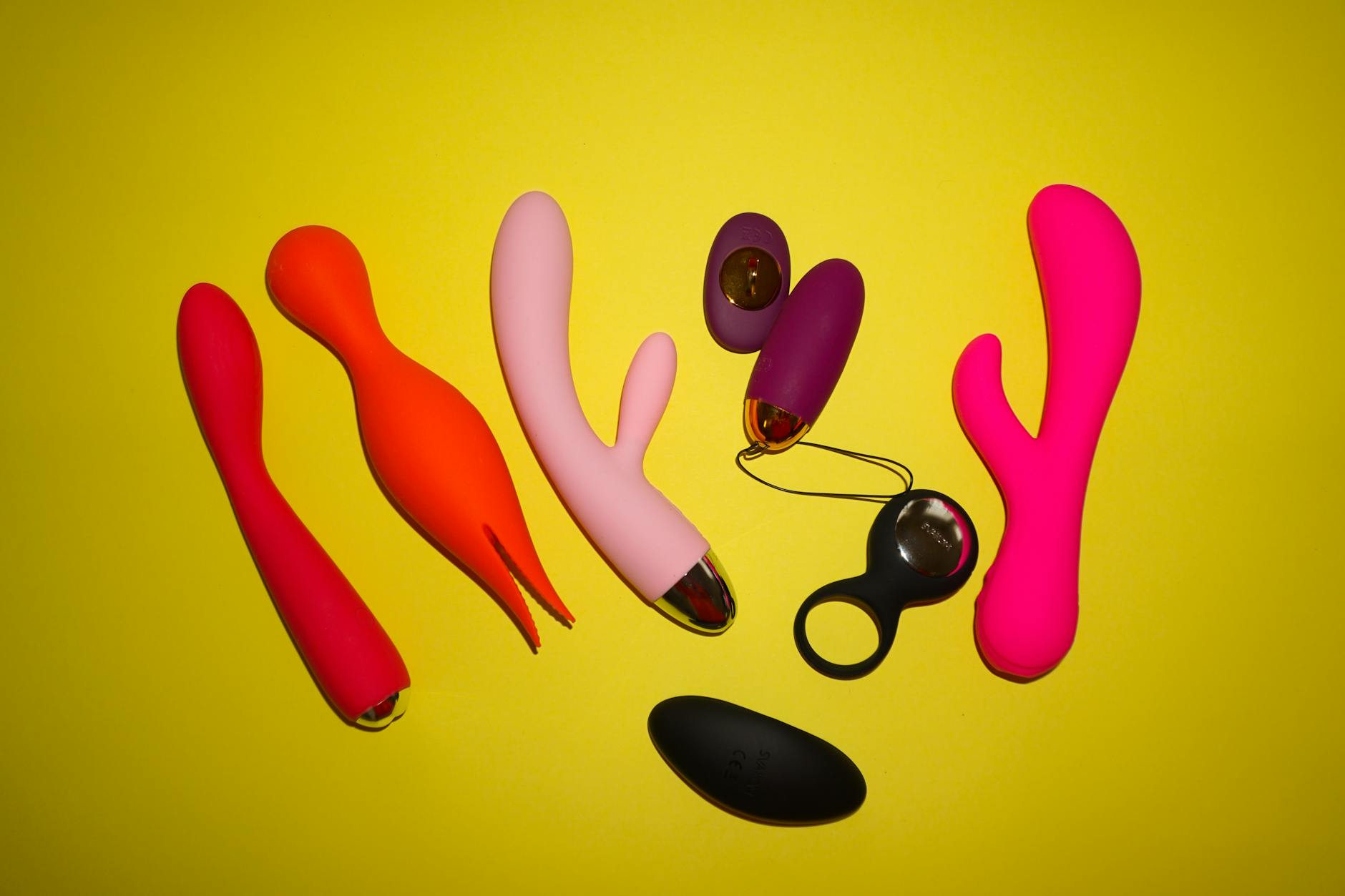
A lemon clitoral vibrator can help you break that loop. But only if you use it differently than you might expect.
The permission reset you actually need
Before you touch the toy, you need to make a deliberate choice: this time is for sensation, not outcomes. Not for proving you can orgasm. Not for clocking how long it takes. Not for hitting some imaginary standard.
Just sensation.
Write this down if it helps. "Today I'm exploring what feels good. That's the only goal." And mean it.
This matters because our brains are prediction machines. They lock onto patterns. If you've spent months or years performing during sex, your brain expects to perform during solo time too. You have to interrupt that pattern explicitly.
When you pick up a lemon vibrator with this frame, everything changes. You're not testing yourself. You're listening to yourself.
How pressure actually changes what you feel
When you're performing, you notice external things. Does my body look okay? Can they see this? Am I taking too long? Am I being loud enough?
When you release that pressure, you notice internal things. The texture of the air on your skin. The exact spot where the vibration feels best. The difference between patterns. Whether you want more stimulation or less. What pace actually builds toward something versus what feels obligatory.
This is information you desperately need, especially if you've been performing for years. You may not actually know what you like anymore. The voice asking "am I doing this right?" has drowned out your actual signals.
A lemon clitoral vibrator gives you something concrete to focus on instead of the performance voice. The sensation becomes the target, not an orgasm or a specific outcome.
The actual practice: starting from zero expectations
There are four things I tell clients who feel pressure in their sexual experience:
First, start with the vibrator off. Hold it. Get familiar with the weight and shape. This sounds silly, but you're resetting the nervous system signal from "goal" to "explore." You're spending time with the tool without the pressure of activation.
Second, turn it on at the lowest setting and spend time with that alone. Not trying to escalate. Not trying to figure out how to orgasm. Just feeling what low stimulation does to your body. Can you find pleasure in this? What does it feel like? This is the opposite of performance.
Third, give yourself permission to stop whenever you want. Not because something's wrong. Just because you want to. Pleasure shouldn't feel like a commitment. When you know you can pause without judgment, your nervous system relaxes.
Fourth, if an orgasm happens, great. If it doesn't, that's equally fine. I know that sounds like a cliche, but here's why it matters: if you're only treating the session as successful when there's an outcome, you're still performing. You're still evaluating yourself.
The goal is to rebuild the connection between your body and actual pleasure instead of imagined standards.
What happens when you stop performing for imaginary judges
After a few sessions without the performance pressure, something unexpected often happens. Your arousal starts to feel more reliable. Your clitoris becomes more responsive. Sensations feel stronger and clearer.
This isn't because your body changed. It's because your nervous system finally landed in the state where pleasure is actually possible.
Clients often report that they feel pleasure from lower vibration settings that never worked before. Or they discover they actually prefer slower patterns. Or they realize they like a lot more foreplay than they thought. These are all things that were true before, but hidden under performance anxiety.
When you use a lemon vibrator from this place—exploration instead of evaluation—you're also building something your nervous system desperately needs: evidence that you're safe. Safe to feel without judgment. Safe to take time. Safe to want what you want.
If you have a partner and you're still feeling the pressure
Honestly, this is the tricky part. Solo sessions can help you reclaim your own pleasure, but if the pressure is coming from a partner's expectations, you need that conversation separate from solo practice.
Don't use your lemon vibrator experience to try to prove something to them. Use it to figure out what's actually true for you. Then tell them. "I learned that I need longer warm-up time" or "I realized I prefer this pattern" or "I discovered I feel better when we're not focused on orgasm."
These conversations are scary because they involve vulnerability. But performance anxiety in a relationship doesn't get better through more sex. It gets better through honesty.
The nervous system piece that changes everything
Performance pressure is a nervous system stuck in sympathetic mode. Your body is ready to be evaluated. So before you even touch a lemon vibrator, you need to do something even simpler: breathe. Four counts in, six counts out. Two minutes. This is the fastest way to shift your nervous system toward parasympathetic.
Then touch the vibrator. Then practice what actually feels good instead of what should feel good.
This might take a few sessions. Your brain has neural pathways built on performance. You're literally rewiring them. That takes repetition. But it works.
FAQ: Pressure, Performance, and Pleasure
Can a lemon vibrator help if I've never been able to orgasm?
Maybe. But honestly, if you can't orgasm and you're in performance mode, the vibrator becomes another thing you're supposedly failing at. Start with the nervous system work first. Get comfortable with sensation without outcome. Then reintroduce the toy. Sometimes the vibrator helps. Sometimes you just needed permission to stop trying so hard.
What if my partner thinks I'm replacing them by using a lemon vibrator solo?
That's their insecurity talking, and it's separate from your pleasure. A vibrator doesn't replace a partner. It's a tool for understanding your own body. You could say something like: "I'm learning more about what I enjoy. That actually makes things better for us, not worse." If they can't hear that, that's a relationship problem, not a vibrator problem.
How often should I use a lemon vibrator if I'm working through performance anxiety?
There's no magic frequency. Some people benefit from a few times a week, others prefer less often. The point isn't the vibrator. The point is the permission and the practice. Once or twice a week is usually enough to rebuild the neural pathway of pleasure without outcome. But if daily feels good, do it.
What if I feel pressure even when I'm alone with the vibrator?
That's totally normal. The performance voice is so ingrained that it shows up even in solo time. When you notice it, pause. Put the toy down. Breathe. Remind yourself that there's no evaluation happening. You're the only one here. Then try again. This is practice. It gets easier.
Can my partner use a lemon vibrator on me to reduce performance pressure?
Sometimes. The key is that they're not using it to "make" you orgasm. They're using it to explore sensation together. Which requires them to also let go of outcome. If they're trying to achieve an orgasm with the vibrator like it's a completion trophy, the pressure is still there. Talk about this first.
How do I know when I've finally released the performance pressure?
You'll feel it in your body. Arousal will feel less frantic. Your breathing will be deeper. You'll notice sensations you never caught before. And paradoxically, once the pressure is gone, orgasms often become easier. Not because you tried harder, but because you finally stopped trying.
The bottom line
Performance pressure is the enemy of pleasure, and it's wildly common. A lemon clitoral vibrator can help you reclaim solo time as actual exploration instead of another arena where you're being graded. But the tool only works if you use it as permission, not as another test.
Your pleasure isn't a performance metric. It's information. Start listening to it instead of evaluating it. The vibrator is just there to help you feel clearly.
If this resonates and you want to go deeper on rebuilding intimate confidence, reach out. I work with couples and individuals on exactly this. Sometimes the best thing you can do for your sexual life is talk to someone who understands the nervous system piece, not just the physical stuff. Contact me here.
Your body deserves pleasure without judgment. Including from yourself.