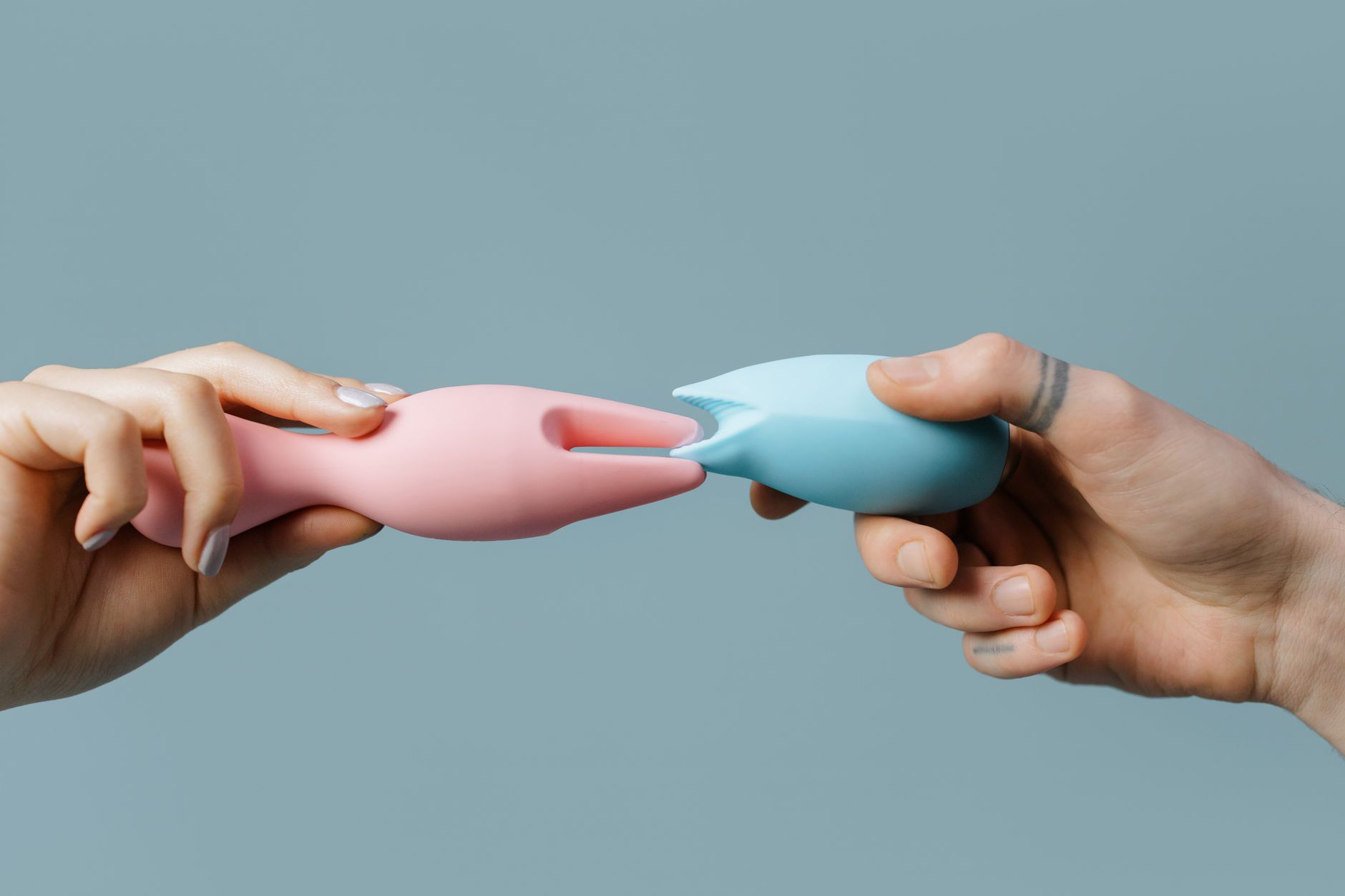
Let's be real about timing
You want sex at 9 p.m. Your partner wants it at midnight. Or maybe it's the reverse. One of you is a morning person, the other needs the evening wind-down. One of you gets spontaneous urges; the other needs planning. Neither of you is wrong. This is not a compatibility crisis. It's just the math of two different nervous systems living together.
The problem most couples solve badly is this: you wait. You wait for your partner to feel ready. Or they wait for you, and the moment passes. A lemon clitoral vibrator changes that equation entirely. Instead of waiting for perfect synchronization, you now have the option to meet in the middle. Literally.
Why timing mismatches happen (and why they're normal)
Desire timing depends on circadian rhythm, stress levels, what you ate that day, whether you've exercised, hormonal cycles, and about a thousand other variables. Your partner's 9 p.m. readiness might be locked to their cortisol drop. Your midnight surge might be when your nervous system finally quiets down. These aren't choices. They're biology.
Here's the part couples therapists know but don't always say: the person with lower desire in a given moment isn't resisting because they don't love their partner. They're often stuck in a different activation state. Their body hasn't caught up to their intention yet.
A lemon vibrator changes the game because it allows one partner to access pleasure on their own timeline while the other partner participates however feels right in that moment. You don't have to choose between "both ready at exactly the same second" or "no sex tonight."
The solo warmup that bridges the gap
Here's the pattern I recommend to almost every couple with timing mismatches:
If your partner isn't ready yet but you are, start alone. Use your lemon clitoral vibrator for fifteen to twenty minutes. The point isn't to finish. The point is to warm up your nervous system, build arousal, and keep your desire alive without forcing your partner into performance mode they don't feel yet.
Your partner can be in the room or nearby. They might read, scroll, or just exist next to you. No pressure. No clock. This does something wild: it often softens your partner's resistance because suddenly there's zero demand on them. You're taking care of your own pleasure, which paradoxically makes most partners want to join in.
When your partner does feel the first signal of readiness (which might come from watching you, or from their own body finally shifting gears), they join in. Now you're not starting from zero together. You're already activated. You meet in the middle.
How a lemon sucker vibrator solves the intensity problem
The lemon vibrator's suction-based stimulation is uniquely useful here because it doesn't require the same synchronized rhythm that traditional vibrators do. Your partner can sit with you, touch you, engage however feels comfortable while you guide your own sensation through the device. You're not asking them to maintain a specific rhythm or intensity. You're asking them to be present.
This matters when desire is mismatched because it removes the performance pressure that often kills arousal for the partner who's trying to catch up. If your partner feels like they need to "catch up" to your intensity or "keep up" with your rhythm, their nervous system tenses. A lemon clitoral vibrator lets them participate without that pressure.
Negotiating the request without resentment
Here's where most couples get stuck: the higher-desire partner doesn't want to ask. They don't want to seem needy. The lower-desire partner doesn't want to feel guilted. Everyone's protecting something.
The conversation that actually works sounds like this:
"I want to be closer to you. My body gets ready at different times than yours sometimes, and that's okay. But I also don't want my desire to disappear while I'm waiting. Could we try something where I can warm up on my own, and you just... are there with me if you want to be? No pressure to match my pace."
Notice what's happening: you're naming the reality (different timing), you're taking responsibility for your own pleasure (not making your partner fix you), and you're creating an invitation instead of a demand. That's the conversation that lands.
Building connection while solving logistics
Sex when desire is mismatched can feel transactional if you're not careful. One partner feels obligated. The other feels guilty. Neither of you feels great afterward.
Using a lemon vibrator together reframes the whole thing. You're not trying to manufacture synchronized desire. You're saying: "Your pleasure matters. My pleasure matters. We're both in this room together. Let's figure out what works."
Sometimes that means you use your device while your partner touches you. Sometimes your partner uses it on you. Sometimes you both do your own thing side by side. Sometimes it escalates into partnered sex. Sometimes it doesn't, and that's fine.
The magic isn't in the device. It's in the permission. You're both allowed to want different things at different times, and the relationship is flexible enough to hold that.
When one person needs way longer than the other
If the timing gap is really wide (one of you ready in minutes, the other needing thirty to forty-five), the warmup approach helps but might not solve it completely. In that case, you need a different conversation.
Instead of trying to synchronize arousal, try separating the activities. One of you might use the lemon vibrator or explore solo pleasure while the other handles other parts of foreplay. Touch. Kissing. Conversation. Teasing. These can all happen at a slower pace while you're getting yourself ready with your device.
What you're doing is extending the foreplay timeline without forcing anyone to "hurry up" or "wait around." Both things are happening at the pace that works for each body.
When one person always wants sex and the other never does
I want to be careful here: if the timing gap is really about "my partner rarely wants sex with me at all," that's a different problem. It might be medication side effects. Stress. Depression. A relationship issue that needs more than a tool to solve.
But if you've checked those boxes and your partner does want sex, just on a different timeline, a lemon clitoral vibrator is genuinely useful. It gives you an option that isn't "perform for your partner" or "suppress your own desire."
If the problem is deeper than timing, though, it's worth talking to a couples therapist. Sometimes a good device helps couples reconnect. Sometimes you need more than that.
The longer conversation about desire
Using a lemon vibrator when you and your partner have different sexual timing also opens a door to deeper conversations. What's actually happening in your partner's body when they say they're not ready yet? Are they stressed? Tired? Not mentally present? Is the timing really about the time of day, or is it about emotional connection?
Maybe your partner needs more touch earlier in the day. Maybe they need you to do the dishes first. Maybe they need to feel seen in a conversation before they can feel sexual. These aren't obstacles to sex. They're information about how your partner's arousal actually works.
The device gives you the time and space to ask these questions without resentment building up.
The anti-resentment benefit
This is the part that matters most in long-term partnerships. When desire timing is consistently mismatched and you don't have a solution, resentment accumulates. The higher-desire partner feels rejected. The lower-desire partner feels pressured. Both people start to associate sex with conflict instead of connection.
A lemon vibrator interrupts that pattern because it gives you a third option. You don't have to choose between "both want it at the exact same moment" or "someone goes without." You can both get pleasure, even if it's not perfectly synchronized.
That might sound small. It's not.
FAQ: Timing, Tools, and Trust
Can using a vibrator alone make my partner feel like I don't want them?
Not if you frame it clearly. The conversation matters. "I want to stay connected to my own pleasure and to you, and this helps me do both" is very different from disappearing into solo time while your partner feels left out. Invite them to be part of it. Make it a choice they make, not a rejection they experience.
What if my partner feels threatened by the vibrator?
Start a conversation before you bring the tool in. Explain that you're not trying to replace them. You're trying to solve a timing problem together. Some partners feel threatened because they assume the vibrator means sex without them. Make clear that's not the goal. The goal is more connection, more often, with less resentment.
How long should I use a lemon vibrator solo before my partner joins in?
There's no standard. Five minutes. Fifteen minutes. Twenty. The point is to warm your nervous system up, not to reach a specific point. Pay attention to what happens with your partner. Are they getting curious? Reaching out? Moving closer? Let that guide the pacing, not a timer.
Does solo warmup work for all couples?
Most, but not all. Some couples need more active partnered involvement from the beginning. Some people find it harder to participate if their partner is already in motion. Pay attention to what actually increases desire in your situation, not what's supposed to work in theory.
What if we're both ready at different times but neither of us wants solo time?
Then a lemon vibrator still helps because it speeds up the lower-desire partner's arousal without asking them to perform. Use it together. Build together. Just keep the rhythm slower and more exploratory than you'd go alone.
Can a vibrator actually fix mismatched desire?
No. It's a tool, not a solution. If the timing mismatch is caused by relationship problems, health issues, or genuine incompatibility in libido levels, a vibrator helps but doesn't fix. It buys you time and reduces resentment while you figure out what's actually going on underneath.
The real work: permission and presence
Honestly, the lemon vibrator isn't magic. What's magic is the permission structure it creates. When you use it together, you're both saying: "We're going to stop waiting for perfect synchronization and start building pleasure wherever we are right now."
That's the thing that actually transforms timing mismatches from a source of resentment into a non-issue. The vibrator just makes it easier to do.
If you and your partner are stuck in a timing mismatch that's building frustration, you don't need to make it more complicated. You need a tool and a conversation. The lemon clitoral vibrator handles the tool part. The rest is up to you. If you want support working through the deeper relationship dynamics, reach out to us. We're here to help.