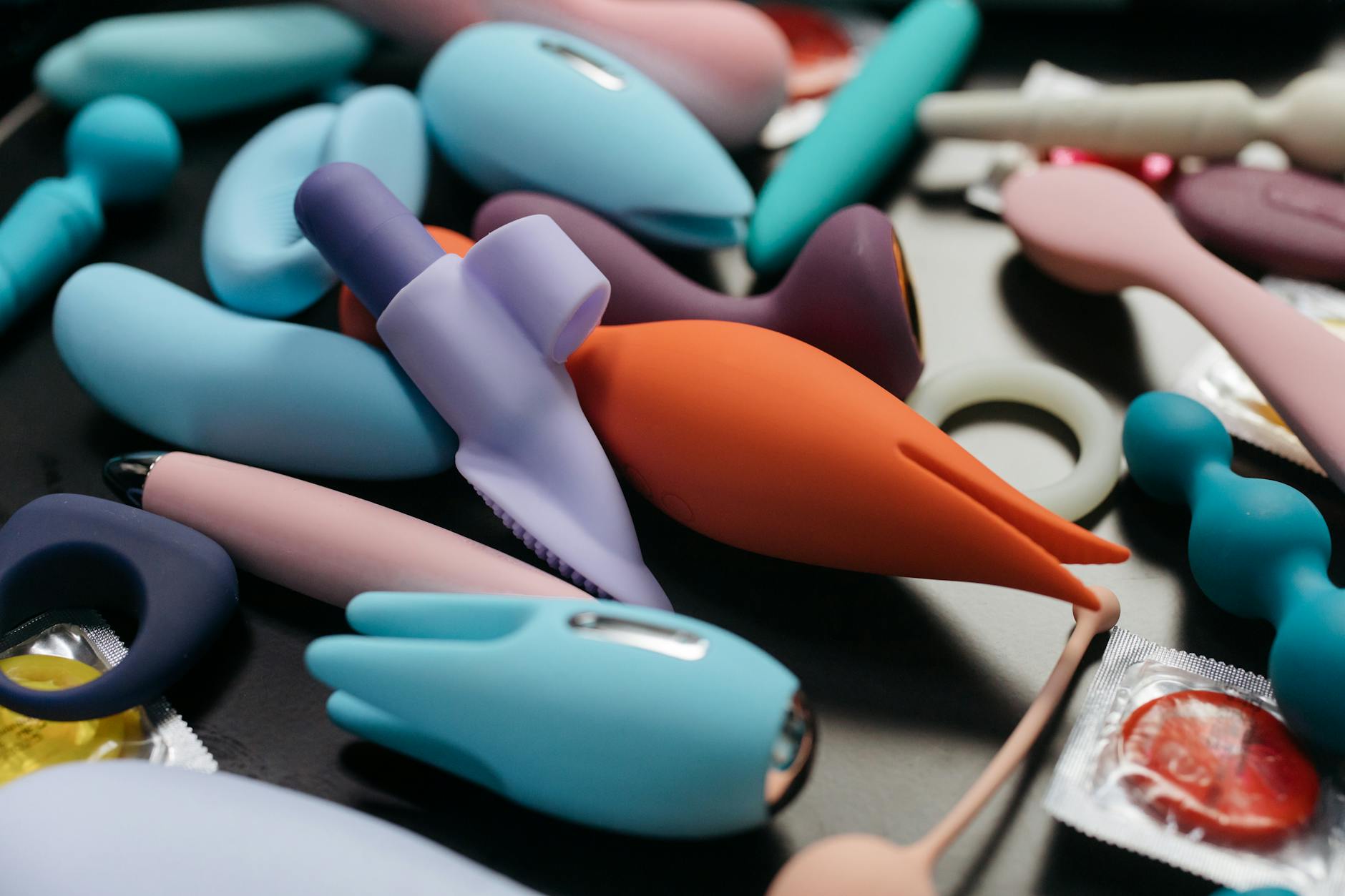
When touch feels like a demand instead of a gift
Here's the thing that doesn't get talked about enough: being touched out is real, it's valid, and it doesn't mean you don't love your partner. You can deeply care about someone and still feel like your nervous system is screaming when they reach for you. That's not rejection. That's a boundary, and boundaries are what keep relationships alive.
The problem is what happens next. Your partner feels the distance. They interpret the flinch as "you don't want me." And suddenly what started as a sensory issue becomes a relationship issue. You're defending yourself. They're hurt. Nothing gets solved.
A lemon clitoral vibrator can actually change this dynamic. Not because it's magic, but because it creates a third thing in the room with you. It shifts the focus from "Am I touching you enough?" to "How do we both feel good?" That's a completely different conversation.
Why being touched out happens (and it's not what you think)
Most people assume being touched out means you're overstimulated, and sometimes that's true. But it's often something quieter and more complex.
You might be touched out from managing other people's emotions all day. From holding space. From being available. If you've spent eight hours as a caregiver, a therapist, a parent who's keeping three children alive, or a partner who absorbs their person's stress, your nervous system isn't tired. It's depleted. The last thing it wants is more relational labor, and sex with a partner (even good sex, even wanted sex) is still relational labor. You have to track their pleasure. You have to be present for their experience. You have to be generous with your body.
You might also be touched out from a specific kind of touch. Responsive sex where you're accommodating someone else's arousal is different from self-directed pleasure where you're the only person you need to track. Sometimes what you actually need isn't less touch. It's a different kind of touch.
A lemon vibrator is that different kind. It's touch you control entirely. It has no expectations of you. It doesn't need you to be emotionally available while it does its work.
The framework: parallel pleasure instead of performance
The couples I work with who've cracked this use what I call "parallel pleasure." Your partner is in the room with you. You might be touching. You might be talking. But you're not performing for each other. You're both doing your own thing, in proximity, with autonomy.
Let's say your partner initiates. Instead of saying no (which creates distance) or agreeing while resenting it (which creates resentment), you might say: "I'm touched out, but I want to stay connected. Want to spend time together while I use the Lem and you do your thing?"
This lands differently than "I need space." You're offering presence, not rejection.
Your partner might use their hands. They might use a toy. They might just be next to you, reading, while you explore your own arousal. The point isn't that you're ignoring each other. The point is that nobody's pleasure is anyone else's job.
This actually solves something deeper: it gives your partner access to your sexuality without burdening them with responsibility for it. They get to witness you feeling good without having to make you feel good. For a lot of partners, that's a relief. For you, it's freedom.
How to set this up without it feeling clinical
I won't lie. The first time you suggest this, it might feel awkward. You're essentially saying "Let's be in bed together but not in the traditional way." That's unfamiliar. That's vulnerable.
Start with timing. Don't bring this up mid-argument or when you're already resentful. Bring it up when you're both calm, maybe even clothed, in conversation mode. Something like: "I've been thinking about how I get touched out, and I don't want that to keep us from connecting. I had an idea. What if sometimes we were together but I could do my own thing with a toy? I'd love to be close to you without feeling like I have to perform."
Listen for what your partner actually needs from that. They might say "I need to feel like you want me." That's real. You can work with it. Maybe you hold their hand while you use a lemon clitoral vibrator. Maybe you make eye contact. Maybe you talk the whole time. The point is you're figuring out what closeness looks like when you're protecting your own nervous system.
Once you're both on the same page, set the scene like you would for any sex. Clean sheets. Phone away. Maybe some music. Create the conditions for both of you to relax. For you, that might mean knowing you have total control of intensity and speed. A lemon vibrator gives you that.
The physical setup that actually works
Honestly, the best position is whichever one lets you relax. You're not performing gymnastics. You're not managing your partner's view angle. You're just... comfortable.
Some people lie next to their partner. Some people sit up with their partner beside them. Some people spoon with their partner's arm around them (if that kind of light touch doesn't feel overwhelming). The Lem is designed to work in any position because you're controlling it. No weird angles. No "can you bend that way?"
Start on the lowest pattern. You're not trying to come right now. You're building familiarity with your own pleasure while your partner is there. That might take 10 minutes or 45. There's no timer.
If your partner also wants to engage with their own arousal, great. If they want to talk, or touch you in ways that feel manageable, great. If they want to just be quiet and present, that's perfect too. The agreement isn't "we'll both get off." It's "we'll both take care of ourselves together."
When this actually deepens connection
Here's what I see happen with couples who stick with this: they stop making sex about proving something to each other. They stop treating pleasure as currency. And weirdly, their actual partnered sex gets better because there's less resentment in the room.
Your partner stops waiting for you to be "ready." You stop performing readiness. The gap closes because nobody's job is to close it. You're both just... real.
Also, and this matters: watching your partner enjoy their own pleasure is genuinely arousing for most people. When you use a lemon vibrator while your partner is present, they get to see you experiencing real, unperformed sensation. That's hot to most people. Not because you're performing for them, but because you're actually feeling something.
Over time, this kind of parallel pleasure often becomes something you both want. It's lower stakes than traditional sex. It's creative. It gives you both permission to explore your own bodies without the pressure of a partner. And paradoxically, it often leads to more physical intimacy overall because the resentment evaporates.
The conversation you might also need
Sometimes being touched out is just about sensory load. Sometimes it's a symptom of something bigger. If you're chronically touched out, especially if you've never been comfortable with touch, that's worth exploring. Not because something's wrong with you, but because you deserve to understand your own body.
If being touched out is new, and it coincides with a life change (a baby, a health issue, a medication, a loss), there's something to unpack there. A lemon vibrator isn't a substitute for addressing that. It's a tool that lets you stay connected to your partner while you figure out what's actually happening.
If your partner responds to this suggestion with anger or pressure, that's also information. That tells you something about how they handle not getting what they want. That's a relationship conversation you might need to have, possibly with a therapist who understands touch and autonomy.
But if your partner is willing to work with this, it's genuinely one of the quickest ways to dissolve the "you're rejecting me" narrative that kills so many otherwise solid relationships.
FAQ
Will using a lemon vibrator alone make my partner feel replaced?
Not if you frame it as something you're doing together. The difference between "I'm using a toy instead of touching you" and "I want to explore my own pleasure while we're close" is massive. One feels like rejection. One feels like intimacy. The conversation you have beforehand matters more than the tool itself.
What if my partner finds it weird or threatening?
That's a fair reaction, and it deserves a real conversation. Some people need reassurance that a toy doesn't replace them (it doesn't) and that you still desire them (you do, just differently sometimes). If they're open to talking, this can actually be a breakthrough moment for your relationship. If they shut it down completely, that might tell you something about whether they can respect your boundaries.
Can I use a lemon clitoral vibrator if I'm also touched out from the vibration itself?
Yes. The Lem uses gentle suction instead of traditional vibration, which feels completely different. It's more like a continuous, rhythmic pressure than the buzzing sensation of other toys. A lot of people who are sensitive to vibration find suction way more manageable. Start on the lowest setting and see how your body responds.
How do I bring this up without making my partner feel bad?
Lead with what you want, not what you don't want. Don't say "I don't like being touched." Say "I want us to stay connected, and here's an idea for how." Make it about solving a problem together, not about what he's doing wrong.
What if I'm touched out all the time, not just sometimes?
That's worth paying attention to. It might be burnout. It might be trauma. It might be medication, or it might be how your nervous system is actually wired. Talk to a therapist, preferably one who understands somatic work and attachment. A lemon vibrator can help in the short term, but if you're chronically touched out, there's probably something deeper to address.
Is this just a workaround for a bigger problem?
It can be a workaround, or it can be a real solution, depending on what the bigger problem actually is. If the bigger problem is "my partner and I have different desire levels," this is part of the solution. If the bigger problem is "I'm not attracted to my partner anymore" or "I resent them for reasons that have nothing to do with touch," a lemon vibrator won't fix it. Honesty about which one you're dealing with is the first step.
The shift that happens
Being touched out doesn't mean you don't love your partner. It means your nervous system needs something different right now. A lemon vibrator lets you give them presence and connection without sacrificing your own boundaries. That's not a compromise. That's actually what intimacy looks like when it's real.
Reach out to our team if you want to explore this more or have questions about how to navigate this in your specific relationship.