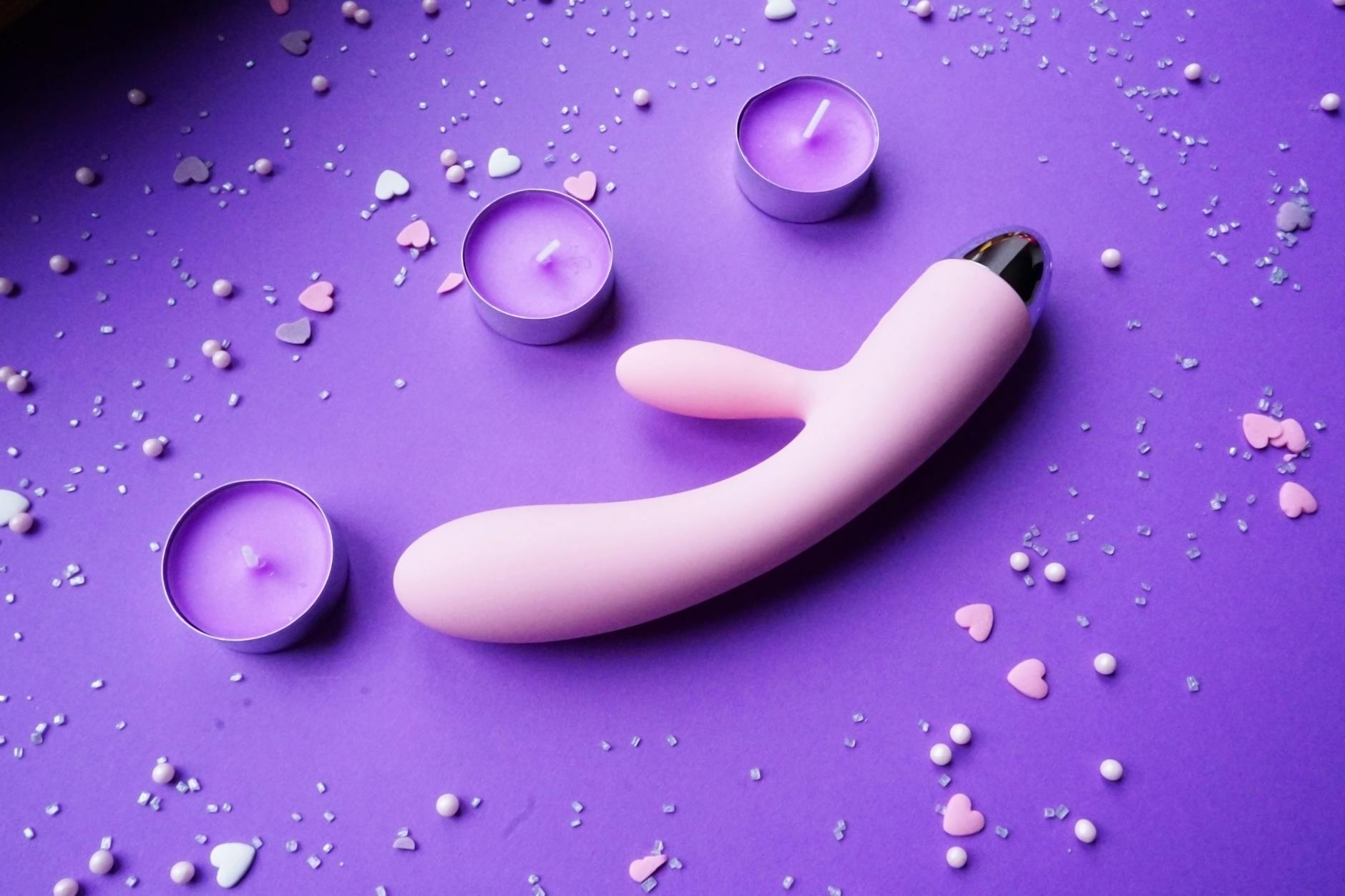
Let's name the actual problem
Your clitoris hasn't lost the capacity for pleasure. What's shifted is the speed and intensity of blood flow getting there, the thickness of the surrounding tissue, and how quickly nerve endings fire. That's not a failure. That's aging. And it's completely workable.
Most people don't realize that clitoral sensation changes across the lifespan not because of damage but because of estrogen withdrawal, reduced vascular tone, and changes in skin elasticity. The good news: you can absolutely restore responsiveness. The better news: a lemon clitoral vibrator is specifically designed to work with these shifts, not against them.
What actually happens to clitoral sensitivity over time
Your clitoris contains roughly 8,000 nerve endings, and those nerves don't disappear. What changes is the signal strength and the pathway there. Three main culprits:
Reduced blood flow. Estrogen supports arterial elasticity and vasodilation. When estrogen drops, blood vessels become less responsive. Getting aroused takes longer because blood has a harder time reaching the clitoral tissues. It's friction with resistance, not friction with momentum.
Tissue thinning. The vulvar skin becomes thinner and more delicate with age. Direct, sustained pressure sometimes feels numb instead of intense. This is particularly true for people who've gone through menopause, but it happens gradually for everyone.
Nerve sensitivity shift. Nerves don't die, but they do change how they respond to sensation. Gentle, sustained touch sometimes triggers more responsiveness than quick, repetitive stimulation. Your nervous system is actually rewiring what feels good.
Here's what doesn't change: your brain's capacity to experience pleasure, the clitoral nerve density, or your ability to orgasm. You're not broken. You're just operating under different conditions.
Why lemon vibrators work differently for reduced sensation
A lemon vibrator uses air-suction technology rather than vibration alone. This matters wildly for clitoral sensitivity changes. Here's why:
Traditional vibrators apply repetitive mechanical stimulation. On thin, less responsive tissue, that can feel either too intense or oddly numb. Air-suction vibrators like the Lem work by creating a gentle seal and rhythmic pressure changes. Instead of hammering a nerve, they're expanding and contracting around it. The sensation is less about friction and more about rhythmic pressure and release. For reduced sensitivity, that's often the difference between "I don't feel much" and "Oh, there it is."
The suction motion also promotes blood flow. By pulling tissue upward, you're encouraging vasodilation and circulation to the clitoral area. It's not just stimulation. It's active blood delivery. Over repeated sessions, this can actually help restore some baseline responsiveness.
The warm-up blueprint that actually works
Forgot about the five-minute preamble. When sensation is less responsive, you need deliberate, extended warm-up.
Start with mental focus (5 minutes). Not meditation or visualization. Actual thinking. Notice what's happening. Do a body scan: where do you feel arousal first? Your chest, your thighs, your brain? This isn't fluff. Your brain is the largest sexual organ. When sensation is muted elsewhere, mental engagement is the first amplifier.
Move to touch without the toy (10 minutes). Hands on skin. Slow strokes on your inner thighs, your breasts, your belly. The goal is to activate skin sensation before you introduce vibration. Your nervous system needs time to dial up responsiveness. Rushing to the toy skips this step.
Introduce the lemon vibrator on the lowest setting (15+ minutes). Start at Pattern 1 or 2. Let it sit gently against your clitoris without movement. You're building anticipation and giving tissues time to swell. After 2-3 minutes, begin gentle circles or side-to-side motion. No pressure. Let the seal build on its own.
Intensity comes later. Once you feel a response (warmth, tingling, that slight swelling sensation), you can explore higher patterns. Most people find that patience in this phase transforms the whole experience.
Total time: 30+ minutes. I know. It feels long. But responsiveness in clitoral tissue is directly proportional to warm-up time. You're not wasting time. You're investing in signal strength.
Combining sensation types to restore responsiveness
When one type of stimulation feels muted, layering creates clarity. Here are three combinations that work:
Lemon vibrator plus water warmth. Before you use your toy, spend 10 minutes in a warm bath or shower. Warm water increases blood flow to your entire pelvic area. Your clitoris will have more blood, more swelling, more responsiveness. Then bring the lemon vibrator into the tub (if it's waterproof) or get out and use it while your tissues are still warm and flushed. You'll likely feel about 40% more sensation.
Lemon vibrator plus mental focus. Instead of passive stimulation, narrate to yourself. Notice what each pattern feels like. Where is the sensation strongest? Is it radiating or localized? This isn't overthinking. It's tuning in. When sensation is quiet, attention becomes a tool for amplification.
Lemon vibrator plus partner touch. If you have a partner, have them touch you elsewhere (your inner thighs, your nipples, your neck) while you're using the toy. You're creating competing signals in different parts of your nervous system. That competition can actually heighten clitoral sensation. It sounds backwards. It works.
When to explore lower intensity instead of higher
Here's the trap: if sensation feels muted, the instinct is to crank up intensity. Wrong move. Lower intensity, longer duration is often more effective for restored sensitivity.
Think of it like adjusting your phone's audio. If it's too quiet, you don't just max the volume. You might move to a quieter room first. Similarly, with a lemon vibrator, try:
Spending 20+ minutes on Pattern 1, letting your body acclimate and respond, rather than jumping to Pattern 5 for five minutes. Pattern 1 for 25 minutes usually creates more total pleasure and arousal than Pattern 5 for five minutes.
Using the toy against the side or base of your clitoris instead of directly on the tip. Reduced sensitivity sometimes means the glans is overstimulated or numb, but the surrounding tissues are still responsive. Shifting contact points can completely change the sensation.
Pulsing rather than sustained suction. Some lemon vibrators offer rhythmic pause modes. Try Pattern 3 (pause mode) before exploring continuous patterns. The breaks let your nervous system reset and re-engage.
The role of consistency and patience
Responsiveness doesn't restore in one session. It restores over weeks. Think of this like cardiovascular recovery. Your clitoral tissues need consistent stimulation to rebuild blood flow patterns and nerve responsiveness.
I recommend using your lemon vibrator 3-4 times per week, even if you're not partnered or seeking orgasm. Just practice. Notice what works. Let your body remember. After four to six weeks of regular practice, most people report noticeable changes in baseline sensitivity, arousal speed, and orgasm intensity.
It's not magic. It's vascular and nervous system adaptation. But from the inside, it feels like you got your pleasure back.
What to discuss with a provider
If clitoral sensation has dramatically dropped in a short window or if you're experiencing pain, numbness that doesn't respond to these strategies, or unusual discharge, see a gynecologist. Sometimes reduced sensation signals thyroid changes, medication side effects, or hormonal shifts that benefit from clinical attention.
Also worth asking about: topical estrogen cream if you're post-menopausal and tissue thinning is severe. It won't rebuild sensation overnight, but combined with consistent lemon vibrator use, it can accelerate responsiveness. A clitoral vibrator and topical hormone therapy work synergistically.
The permission piece
A lot of reduced clitoral responsiveness isn't actually physical. It's psychological. You've been told for decades that pleasure should be instant and effortless. When it's not, you assume something's broken. So you stop trying.
Here's the reality: pleasure that requires presence, patience, and the right tool is not broken. It's evolved. And honestly? It's often deeper.
People also ask
Does clitoral sensitivity permanently decrease with age? No. It changes, but it's responsive to intervention. Blood flow, consistent stimulation, and the right tool (like a lemon clitoral vibrator) can restore a lot of baseline sensitivity. You're not losing it permanently. You're adjusting how you access it.
Can a lemon vibrator help if I take antidepressants that affect sensation? Often, yes. Many SSRIs flatten sexual sensation by reducing blood flow and dulling nerve responsiveness. Suction-based stimulation like the Lem can sometimes bypass some of that numbness because it works through pressure changes rather than just vibration. That said, chat with your doctor about this. Sometimes adjusting timing or dosage helps. Sometimes adding a sensation tool helps. Sometimes both together.
How long does it take to feel the difference? Usually 2-4 weeks of consistent use (3-4 times weekly). Some people notice it in days. Some take six weeks. Your vascular system is slow to adapt, which is frustrating but real.
Is there a "too old" for clitoral sensitivity to improve? Absolutely not. I've worked with clients in their 60s, 70s, and beyond who reported major shifts in responsiveness after prioritizing consistent stimulation and warm-up time. Age is not a barrier. Consistency is the variable that matters.
Should I use lube with a lemon vibrator if my tissue is thin? Yes. Even though suction vibrators don't require lube the way traditional vibrators do, water-based lube on thin tissue creates a better seal and reduces any micro-abrasion. Use it. Your tissue will thank you.
Is it normal for orgasms to feel different or less intense as sensation changes? Completely normal. And often, once you adjust your approach and warm-up, intensity comes back differently. You might get multiple orgasms where you used to get one. You might get longer, slower waves instead of quick peaks. Different doesn't mean worse. It often means richer.
The bottom line
Clitoral sensation changes across your lifespan, but responsiveness doesn't disappear. With warm-up, patience, the right tool like a lemon vibrator, and consistent practice, you can rebuild baseline sensitivity and pleasure. Your clitoris isn't aging out of pleasure. It's asking you for a different approach. Once you give it that, most people find that what emerges is actually better than before.