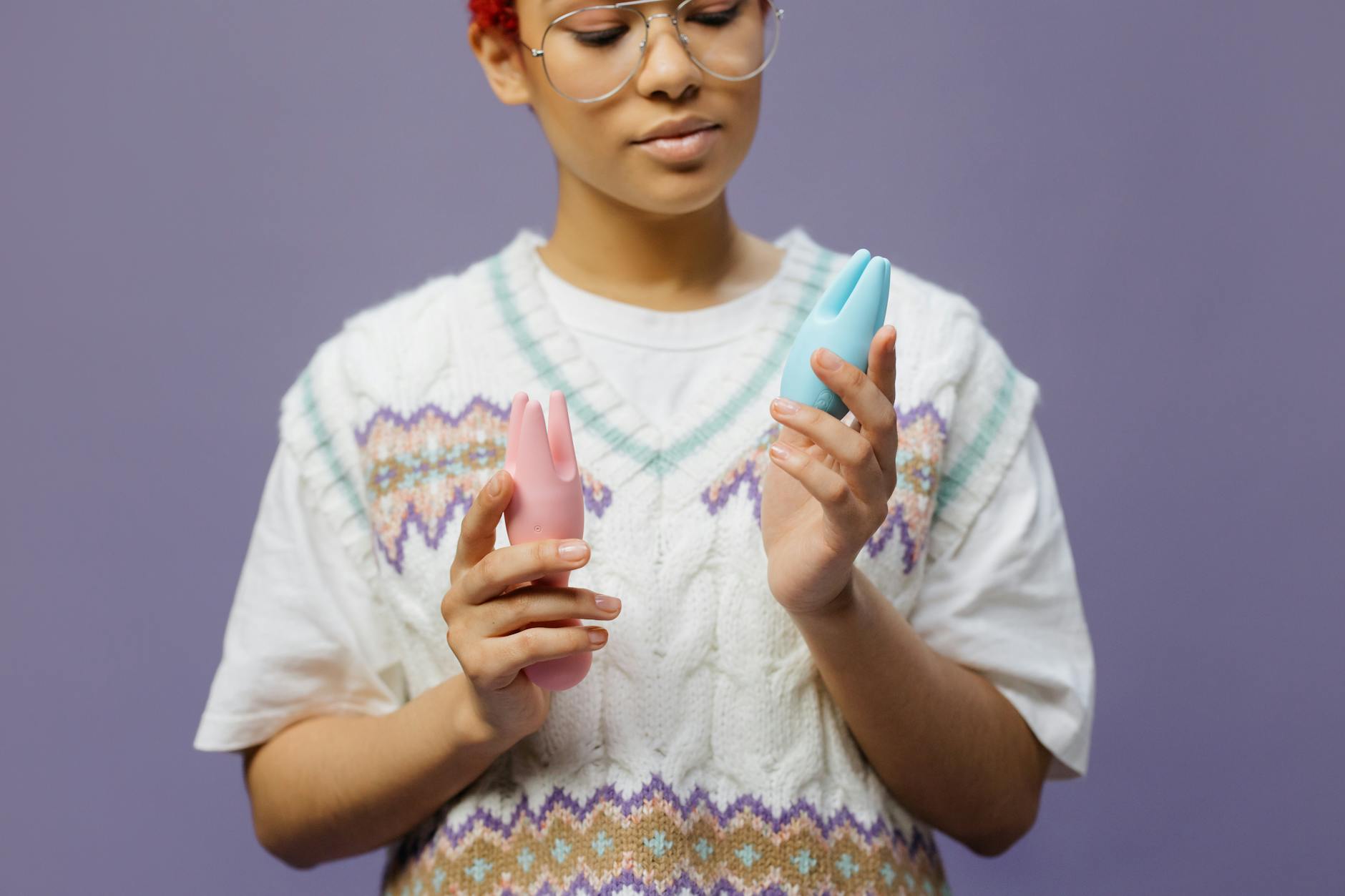
How to Use a Lemon Vibrator for Solo Pleasure Without Partner Pressure
Here's what nobody says out loud: half the people who come into my therapy practice with "low libido" don't actually have low libido. They have low desire to perform for an audience. Solo, behind a locked door, with zero stakes and zero eyes on them? Totally different story.
If you've been using a lemon vibrator (or any clitoral vibrator) only in the context of partnered sex, you're missing the entire point. Solo pleasure isn't the opening act. It's the main event. And it changes everything about how your nervous system learns to respond.
Why solo matters more than you think
When you're with a partner, your brain is split three ways: on physical sensation, on their reaction, and on whether you're "taking too long." That cognitive load is real. It quiets your nervous system. It makes orgasm harder, not easier.
Solo, there's no clock. No performance metric. No "does this feel right for them." Your only job is to learn what actually feels good to you, which sounds simple until you realize most of us have never actually done it.
I see this constantly in long-term couples: the person with a vulva believes they can't orgasm, when what's actually happened is they've never tried outside the relationship. Once they spend two weeks exploring alone with a lemon vibrator, suddenly the nervous system unwinds. Suddenly they remember what arousal feels like when the stakes are zero.
The nervous system piece (and why it matters)
Your parasympathetic nervous system.the one that relaxes, that allows arousal to build.needs safety signals. When you're alone, every signal your body gets says "this is safe." No judgment. No performance. No comparison.
When a partner is present, even a loving one, your nervous system runs a background check. Are they enjoying this? Am I taking too long? Should I try something else? That hypervigilance literally inhibits blood flow to the clitoris. It makes sensation harder to access.
Using a lemon vibrator solo gives your body permission to be selfish. To chase sensation for sensation's sake. To spend 45 minutes building toward something slow instead of rushing to a finish line that doesn't actually exist.
Starting with the right mindset
Before you even pick up a lemon vibrator, the setup is mental, not physical.
Drop the idea that solo sex is "practice" for partnered sex. It's not. It's research. You're learning a language your body speaks. That research is the foundation, but the goal is not to become more efficient in bed. The goal is to remember that your pleasure is the destination, not a stepping stone to someone else's experience.
Second, kill the clock. If you set aside 15 minutes and expect results, you're still performing. You're still tracking. Block out an hour minimum, preferably two hours if you can. The first 20 minutes might be just breathing and baseline arousal. That's not "wasting time." That's letting your system warm up.
Third, choose a space where you actually feel safe. Not just physically alone, but truly safe. No roommate who might walk in. No phone buzzing. No part of your brain listening for footsteps. If you live with a partner or family, a locked door isn't enough if you're still tense. A day when they're genuinely out. A weekend morning when you know you have two uninterrupted hours. That's the baseline.
How to actually use a lemon vibrator for solo pleasure
Start fully clothed. Seriously. Sit somewhere comfortable.a bed, a couch, a chair with good back support.and just hold the lemon vibrator. Get used to the weight of it. The texture. The curve.
If you own a Lem vibrator or similar lemon clitoral vibrator, you're working with suction-based stimulation, which behaves very differently than traditional vibration. It's less intense on sensitive tissue initially, which means you can play longer without overstimulation. Start at pattern 1 or 2. Hold it against the outside of your underwear. Don't go directly to skin yet. Let your body register that this object is here, it's controllable, and nothing bad happens.
Once you feel even baseline arousal.a slight warming, maybe some tingling.then remove clothing from the waist down. This is where people rush, and rushing kills the entire experience. You're not trying to reach orgasm in the next five minutes. You're building arousal the way your body actually builds it: slowly.
Approach directly, or approach from the sides. The lemon sucker design works brilliantly for both. Experiment with where the sensation feels strongest for you. Some people prefer direct clitoral contact. Others prefer the side of the clitoris, or the entire vulva. There's no right answer. You're mapping your own landscape.
Stay with one pattern and one spot for at least five minutes. Your brain and nervous system need repetition to recognize "this is safe, this feels good, keep going." People who jump between patterns every 30 seconds are essentially breaking the arousal chain. You're resetting instead of building.
Once arousal starts climbing.and you'll feel it, a shift in breathing, a spread of warmth.you can start changing things: pattern, angle, rhythm. But now you're building on foundation instead of starting from scratch.
The frustration piece (and what to do when nothing happens)
If you've been in a high-pressure partnered context for years, your nervous system might not know how to relax solo either. You might feel distracted, or notice you're checking the time, or suddenly remember you need to clean the kitchen. That's not failure. That's deconditioning.
Your body learned that arousal happens on a schedule (when a partner initiates) or not at all. Relearning takes time. If you session and nothing happens, that's not wasted time. You're sending a signal to your nervous system: "I'm here, we're safe, there's no rush." After three or four solo sessions, most people feel a noticeable shift.
If you're on medication that affects arousal.SSRIs, antipsychotics, certain blood pressure meds.solo exploration becomes even more important. You're not trying to hit some external standard. You're learning what your body is actually capable of right now, on this chemistry.
Building a sustainable solo practice
Once you've figured out what works, the question becomes: how often? Lemon vibrators are safe for daily use if you want. There's no harm in regular solo exploration. But most of my clients find that even twice weekly makes a massive difference. Once weekly, minimum, if you're rebuilding arousal after years of pressure.
The goal isn't to "train" your body. It's to maintain a relationship with your own pleasure. To remember that you're capable of sensation and satisfaction independent of anyone else's presence or approval. That's the real superpower.
When you then return to partnered sex, everything shifts. You know what you like. You know what an orgasm feels like on your terms. You can ask for what you want because you're not guessing. You're not performing. You're instructing. That changes the entire dynamic.
Why this actually saves relationships
I'm not being hyperbolic: couples who both maintain solo sexual practices have better partnered sex. Period.
Why? Because neither person is relying on the other to generate their arousal. You're both coming in already connected to pleasure. You're collaborating, not expecting your partner to fix what you believe is broken in yourself. That removes an impossible burden from the relationship. It also makes partnered sex feel like a choice, not an obligation.
The lemon vibrator becomes a tool not for avoiding your partner, but for finally meeting them from a place of abundance instead of scarcity. You know what you like. You're not desperate. You're available. And available partners are the ones who actually want to be there.
Getting started this week
Block out two hours. Minimum. Pick a day when you know you won't be interrupted. Choose a space that feels genuinely private. Get a lemon vibrator or similar clitoral vibrator if you don't already have one. The Lem vibrator is specifically designed for people rebuilding their relationship with pleasure because the suction-based stimulation is gentler and allows for longer, more exploratory sessions than traditional vibration.
Go in with zero expectations of orgasm. That's not the goal on day one. The goal is to reconnect with what your body can feel when you're the only person in the room.
That's it. That's the entire protocol.
Your pleasure matters not because it serves someone else. It matters because it's yours. Solo exploration with a lemon sexual toy isn't avoidance of partnership. It's the foundation of real partnership. It's the difference between showing up desperate and showing up whole.
People also ask
Is using a lemon vibrator alone considered normal?
Completely normal. Solo pleasure is foundational to sexual health, not an alternative to partnered sex. Most sex therapists recommend regular solo exploration as core maintenance, similar to exercise or sleep. In my practice, I've seen solo practice resolve more sexual concerns than any other single intervention. It's not "something you do before you meet someone." It's something you do throughout your life, with or without a partner.
How often should I use a lemon clitoral vibrator for solo pleasure?
There's no magic number. Some of my clients find weekly solo sessions enough to maintain arousal and confidence. Others prefer two or three times weekly. Daily use is physically safe if you want it. The question isn't "how much is healthy," it's "how much helps me feel connected to my pleasure." Start with twice weekly and adjust based on what feels nourishing, not obligatory. If solo play starts feeling like another task on your to-do list, you've lost the point.
Can using a lemon vibrator solo affect my partnered sex life?
Yes, and almost always positively. When you know your own body, know what you like, and can communicate that, partnered sex improves dramatically. You're not relying on your partner to somehow guess or generate arousal that you yourself haven't found. You're coming to the table as a full collaborator. Some partners worry that solo play means their partner will want them less. That's not how arousal works. Arousal is not a fixed pie. More pleasure solo doesn't mean less pleasure together. It means showing up together from a place of abundance instead of neediness.
What if I feel guilty about solo pleasure when I'm in a relationship?
That guilt is cultural conditioning, not a reflection of reality or relationship health. I spend a lot of my time helping people untangle the belief that their sexuality belongs to their partner. It doesn't. Your pleasure is yours. Your partner's pleasure is theirs. When you both own that fully, the relationship actually deepens. If your partner has explicitly said they don't want you exploring solo, that's a conversation worth having about control and trust. A healthy partner wants you to feel good in your own body, alone and together.
How do I know if a lemon vibrator is right for my body?
Lemon vibrators, especially suction-based designs like the Lem, work well for most bodies because they're gentler on sensitive tissue and don't require the same direct pressure as traditional vibrators. If you have vulvar pain, increased sensitivity after hormone changes, or just prefer a lighter touch, the lemon clitoral vibrator design is excellent. That said, every body is different. You might prefer a different shape or intensity. Start with a device designed for your actual sensitivity level, then explore from there. Trial and adjustment is part of the research.
Will solo pleasure with a lemon vibrator change what I'm attracted to in my partner?
No. Your attraction to your partner is about them as a person, not about their ability to generate sensation in your body. If anything, solo exploration allows you to separate "do I desire this person" from "can my body access pleasure right now." Those are different questions. Solo play answers one. Your relationship answers the other. Both matter. Neither cancels out.
If you're ready to rebuild your relationship with pleasure, solo practice with a quality lemon vibrator is the most direct path. And if you're trying to figure out how to talk to your partner about incorporating solo practice into your life, that's a conversation worth having. For guidance on navigating those discussions, learn more about rebuilding intimacy after emotional distance.
Your pleasure is not a luxury. It's not selfish. It's the ground floor of sexual health. Solo exploration is where that starts.