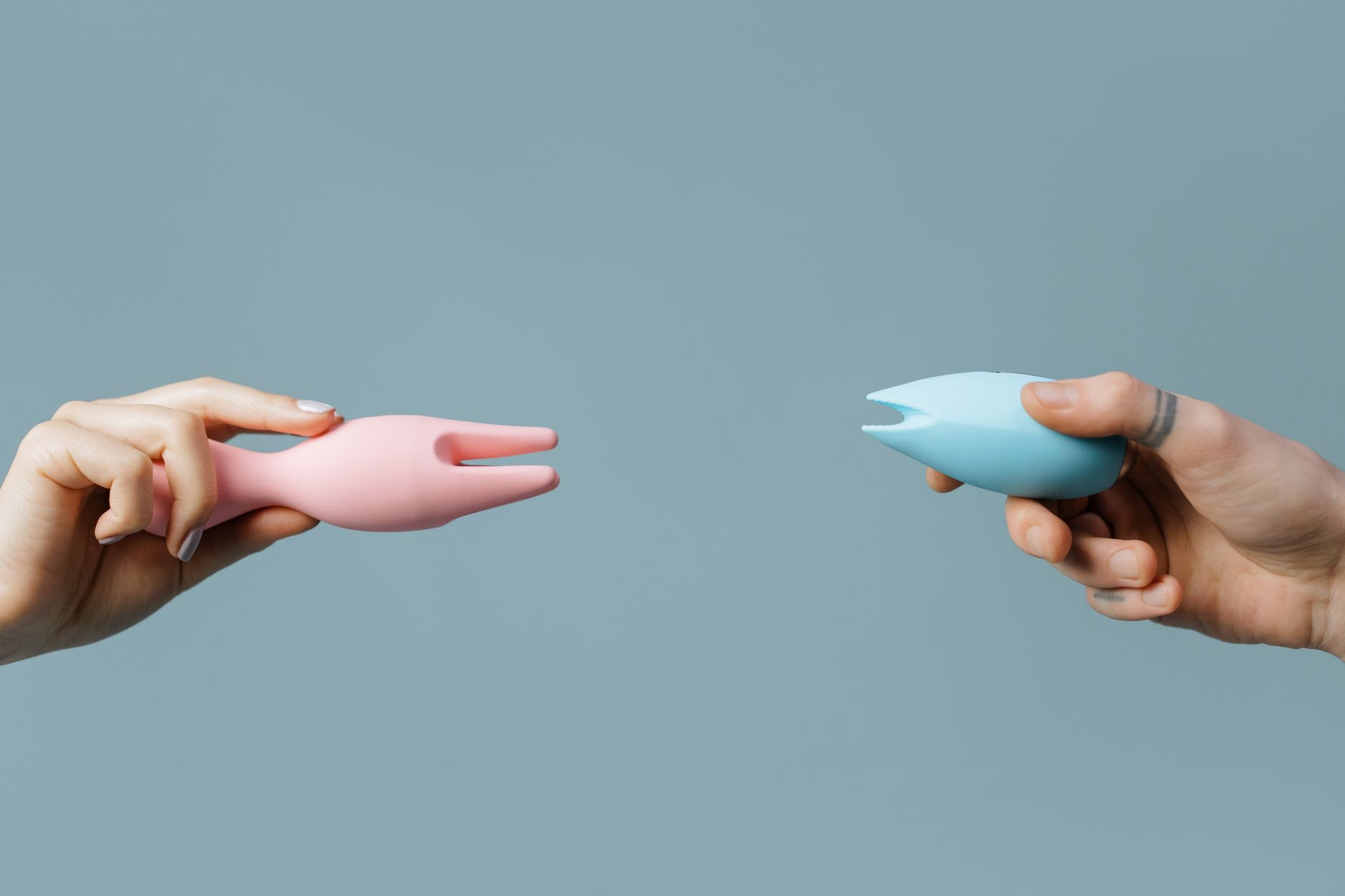
Let's talk about the awkwardness nobody names
You've been apart. A month, six months, longer. Now you're back together and the bed feels different. Your partner's body is familiar and completely foreign at the same time. Touch that used to be automatic now requires permission. Arousal doesn't show up on schedule anymore.
Most couples in this position try to muscle through it. You kiss. You wait for desire to arrive like it used to. It doesn't. Then comes the shame spiral: "Why isn't this working? Are we broken? Did we lose it?"
You didn't lose anything. Your nervous systems need a reboot. And a tool like a lemon vibrator can actually make that easier, not cheesier.
Why lemon vibrators change the reconnection conversation
Here's what happens neurologically when you've been touch-deprived: your nervous system is in a protective state. It doesn't trust that touch is safe yet. Introducing a vibrator isn't about skipping the hard emotional work. It's about giving your body permission to feel pleasure without the pressure of performing for your partner.
When you use a lemon clitoral vibrator solo first, you're essentially telling your nervous system: "This is safe. This is just for you." The physical sensation of a tool like the Lem bypasses a lot of the psychological friction that makes reconnection stall. You're not waiting for your partner to be perfect. You're not trying to read their body for clues about whether they still want you.
That reset matters. Research on couples who successfully rebuild physical intimacy shows that the ones who introduce external tools or toys report higher satisfaction and faster return to pre-separation desire. It's not magic. It's just neurochemistry plus permission.
The solo phase: building your own arousal back
Start here, alone. Your partner doesn't need to know about this yet, and honestly, knowing might introduce weird performance pressure on both sides.
Set aside 20-30 minutes when you have genuine privacy. Not rushed. Not right after a tense conversation about bills. A time when your mind is already calm.
Use water-based lubricant. Even if your body responds quickly, lube makes the experience feel intentional rather than frantic. It signals that this is self-care, not emergency sex.
Start with the Lem on lower settings, or whichever lemon vibrator you choose. Let it sit against your clitoris without much movement. Notice what comes up. Sometimes it's pleasure. Sometimes it's emotion. Anger, grief, loneliness. All of that is normal. Your body has been storing things.
Don't rush to orgasm. The point isn't to come. It's to remember that your body still feels good, still wants things, still deserves attention. Spend a few days or even a week in this phase. Solo reconnection takes time.
Bringing it into the room: the conversation
Eventually you'll want to use a lemon vibrator together. This requires a very specific conversation, and most couples skip it, which is why reconnection stays awkward.
Don't start this talk in bed. Pick a calm moment. Morning coffee. A walk. Somewhere neutral.
Say something like: "I've been thinking about us, and I know reconnection is feeling different than it used to. I want to feel good again, and I want you to feel good. I've been using a vibrator, and I'd like to try it together if you're open to it. No pressure. Just exploring."
Most partners say yes. Some say they need time to think. Some ask questions. That's all normal. What matters is that you've named the thing instead of letting awkwardness do the naming for you.
If your partner says no, don't push. That's information you need. It might mean they have anxiety about toys, or about the reconnection process itself. That's a separate conversation to have, possibly with a therapist.
If your partner says yes, set expectations clearly. Using a lemon vibrator together doesn't mean you're jumping straight to intercourse. It means you're touching, exploring, and letting pleasure lead instead of obligation.
The first time together: lowering the pressure
Remove expectations about where this leads. Most couples make the mistake of framing vibrator use as "foreplay to sex." That's backwards. Make vibrator use the main event.
Start with clothes on, both of you. Let your partner see you use the vibrator. This is vulnerable. That vulnerability is the whole point. You're showing them: "I like this. I want this. I'm not ashamed." That visual permission softens their nervous system too.
Then slow down. Put the vibrator aside. Kiss. Touch. Bring it back. This rhythm matters because it helps both of your bodies remember what pleasure and connection feel like before you layer in all the old patterns and timing expectations.
If you want, let your partner hold the vibrator while you guide them. This puts them in a supportive role instead of a performance role. They're helping you feel good. That's less pressure than trying to be the source of arousal all by themselves.
Don't talk much during this. Let your body do the communicating. If something feels good, you can say "yeah, like that." Otherwise, stay quiet and let pleasure speak.
The second phase: rebuilding without the vibrator
After a few sessions together with the Lem or another lemon clitoral vibrator, try a few sessions without it. You're not abandoning the tool. You're just testing whether your nervous system has reset enough to access pleasure through touch alone.
You might find that you can now. Or you might find that you still need the vibrator for a while longer. Both outcomes are fine. The goal isn't to return to how things were before the break. You're building something new.
Many couples find that using a vibrator actually improves their non-vibrator sex because they've broken the silence around pleasure. You've modeled what turns you on. That permission carries forward.
If you get stuck in this phase, how to use a lemon vibrator when sensation feels numb during arousal covers some additional strategies for when pleasure still feels distant even with external tools.
What to do if it still feels wrong
Sometimes you'll use a lemon vibrator together and nothing changes. You're both doing the right things and your body still doesn't want to reconnect. That's worth paying attention to.
It might mean the break revealed something real: resentment, incompatibility, a need for actual emotional repair before physical reconnection is possible. A vibrator can't fix that. Only time, honesty, and probably therapy can.
It might mean your nervous system needs more than solo practice and permission. If depression or anxiety arrived during the separation, that might need clinical attention before pleasure rewires itself.
Or it might simply mean that you need more time. Reconnection timelines are personal. Pushing because you think you "should" be ready will extend the problem, not solve it.
The permission piece
Here's what I've learned from two decades of working with couples: reconnection usually stalls not because desire is gone, but because people are waiting for permission. Permission to want something different. Permission to ask for what they actually need. Permission to use tools. Permission to take time.
A lemon vibrator is permission in object form. It says: "Your pleasure matters enough to be intentional about." That message does more work than the vibration itself.
Start there. The rest follows.
People also ask
Will using a vibrator make my partner feel inadequate during reconnection?
Not if you frame it right. A vibrator isn't a replacement for your partner. It's a bridge that helps your body remember arousal so that you can then share that feeling with them. Most partners actually feel relieved because it takes pressure off them to be the sole source of your pleasure. If your partner does feel insecure about it, that's worth addressing directly, possibly with a couples therapist.
How long should we wait after a separation before trying physical reconnection?
There's no timeline that works for everyone. Some couples reconnect within days. Others need weeks or months. The rule is: don't push either person into touch before their nervous system feels safe. Solo exploration with a lemon vibrator can start right away. Partnered reconnection should wait until both of you have explicitly said yes, not just defaulted into it.
Can a lemon vibrator replace the emotional work of rebuilding trust?
No. A vibrator can ease physical awkwardness and help your body access pleasure again. But if trust was broken before the separation, that requires actual conversation, accountability, and time. Using a toy without doing the emotional repair work is like decorating a house that needs a foundation. It might look better temporarily, but the structure is still compromised.
What if one partner wants to use the vibrator and the other doesn't?
Respect that boundary. Your partner might need more time, might have past experiences with toys that make them uncomfortable, or might need to work through feelings about your separation first. Don't make the vibrator a symbol of whether they want you. It's just a tool. If this becomes a pattern of sexual incompatibility, couples counseling is worth exploring.
Is it normal to feel emotional when reconnecting physically after time apart?
Completely normal. Your body has been in protection mode. When safety returns, so do suppressed feelings. Tears, laughter, sadness, longing all belong in that space. Let them come. Crying during or after physical reconnection doesn't mean something is wrong. It usually means something real is happening.
How do we move forward if reconnection isn't working even with a vibrator?
That's the time to get professional support. A couples therapist, especially one trained in sex-positive approaches, can help you figure out whether the issue is physiological (medical conditions, medications), psychological (trauma, anxiety), or relational (actual incompatibility or unresolved hurt). Sometimes reconnection needs clinical support to move forward.
One more thing
Reconnecting after time apart is harder than people admit. There's no shame in needing tools, conversations, and time to make it work. A lemon vibrator won't fix a broken relationship, but it can help your body feel safe enough to explore pleasure again. And sometimes that small reset is the thing that makes everything else possible.
If you're navigating reconnection and it feels stuck, reach out. Contact us to talk through what's happening, or explore resources on our site for other angles on rebuilding physical intimacy.