
Let's start with what your therapist would tell you
The fear of losing desire as you age is one of the most common things I hear in my practice, and it deserves a direct answer: desire doesn't have an expiration date. What changes is not whether you can want sex. It's how you access it, what triggers it, and what kind of attention it needs from you.
That's actually good news. Most people don't realize that because the narrative around aging and sexuality is built entirely backward.
What research actually says about desire and age
Here's the contradiction nobody talks about: studies on sexual satisfaction show that people in their 50s and 60s report higher sexual satisfaction than people in their 30s. Not lower. Higher.
That doesn't mean desire increases with age. It means something subtler: the relationship between desire and satisfaction changes. When you're younger, desire might feel like it happens to you. By your 40s and 50s, it becomes something you actively choose, understand, and cultivate. That shift turns out to be more reliable than spontaneous desire ever was.
The fear you have is legitimate, though. Hormonal changes, medication side effects, life stress, and reduced blood flow to genital tissue do make arousal slower and less obvious. But slower doesn't mean gone. It means intentional. And intention, paradoxically, often leads to better orgasms than spontaneity ever did.
Why the lemon vibrator becomes more valuable, not less, with age
A lemon clitoral vibrator like the Lem works particularly well as you age because of how it stimulates. The suction pattern doesn't rely on friction or intensity. It works by creating a gentle pressure wave that awakens nerve endings without needing the kind of persistent direct contact that can feel overwhelming or numb.
Three reasons this matters:
First: it bypasses the waiting game. Younger bodies sometimes respond to minimal stimulation. Aging bodies need more intentional activation. Lemon vibrators are designed to get there faster without feeling aggressive.
Second: it provides reliable feedback. When you're worried about losing desire, that anxiety itself can block arousal. The immediate, consistent sensation from a lemon sucker gives you proof that your body is still responding, which quiets the mental noise.
Third: it reframes what pleasure looks like. Younger sexuality often centers on penetration or partner-dependent stimulation. Using a lemon vibrator makes solo pleasure a deliberate practice, which means you stop waiting for desire to happen and start actively building it.
The specific way to use your lemon vibrator when fear is in the room
Honestly though, the mechanics matter less than the mindset. Here's how I recommend approaching it:
Start with zero expectation. Don't use your lem vibrator with the goal of having an orgasm. Use it as a reconnection tool. Think of it as checking in with your body, not performing for it. Start on the lowest setting, spend 10 minutes just noticing what sensations are available, and stop.
Do this alone first. The fear of losing desire is often tangled up with partner dynamics. You need private time to remember that pleasure is something you generate independently of anyone else's presence or validation.
Use it as part of a routine, not as a rescue. The women I work with who feel most connected to desire are the ones who use their lemon vibrator 1-2 times per week, regardless of whether sex with a partner is on the table. That consistency tells your nervous system that pleasure is a normal, regular part of your life. Not a special occasion. Not something that needs justification.
Notice what actually triggers you. After 5-6 sessions with your lemon vibrator, patterns emerge. Maybe you need to read something erotic first. Maybe you need to have just worked out. Maybe you need to be warm, or in a specific room, or at a specific time of day. That information is gold. It's not a limitation. It's a map.
What changes about desire and what absolutely doesn't
Let me be clear about what the research shows:
What changes: time to arousal, physical sensitivity in some areas, the predictability of orgasm, and how much distraction can derail the whole thing.
What doesn't change: your brain's capacity for pleasure, your clitoral nerve density, your ability to have intense orgasms, or your right to desire sex. The neural pathways for arousal are still there. The hormonal shifts mean you have to activate them more deliberately, but they're not going anywhere.
I had a client in her late 50s who hadn't had partnered sex in eight years because she'd convinced herself desire was gone. Six weeks of solo practice with a lemon vibrator, and she realized her desire wasn't gone. It was just waiting for her to get curious about it again. That shift changed her entire relationship to aging.
How to talk about this with a partner if you're in one
Here's where a lot of people get stuck: the fear of losing desire becomes a secret, and secrets corrode intimacy faster than almost anything else.
If you're partnered, tell them what you're doing. Not as a confession. As an invitation. "I want to stay connected to my sexuality as I get older, and I'm using a lemon vibrator to practice that. I'm not looking for anything to change between us right now. I just want you to know this is happening."
That sentence does three things. It makes your pleasure visible instead of shameful. It removes the pressure on your partner to be responsible for your desire. And it often, unexpectedly, creates space for their own curiosity.
The difference between fear and actual change
This is the part I come back to in almost every session on this topic: most of the people I work with who fear losing desire haven't actually lost it. They've just stopped looking for it in the obvious places.
When desire looked like spontaneous arousal at 25, you could find it anywhere. At 45 or 55 or 65, it looks like intention, curiosity, and a few minutes alone with your lemon vibrator. That's not loss. That's evolution.
The women who use tools like the Lem to stay connected to pleasure are almost always the ones who report that their sexuality gets better, not worse, as they age. Not because the tool is magic. Because using it is an act of saying to yourself: my pleasure matters. My desire is worth my attention. I'm not going to let fear rewrite my story.
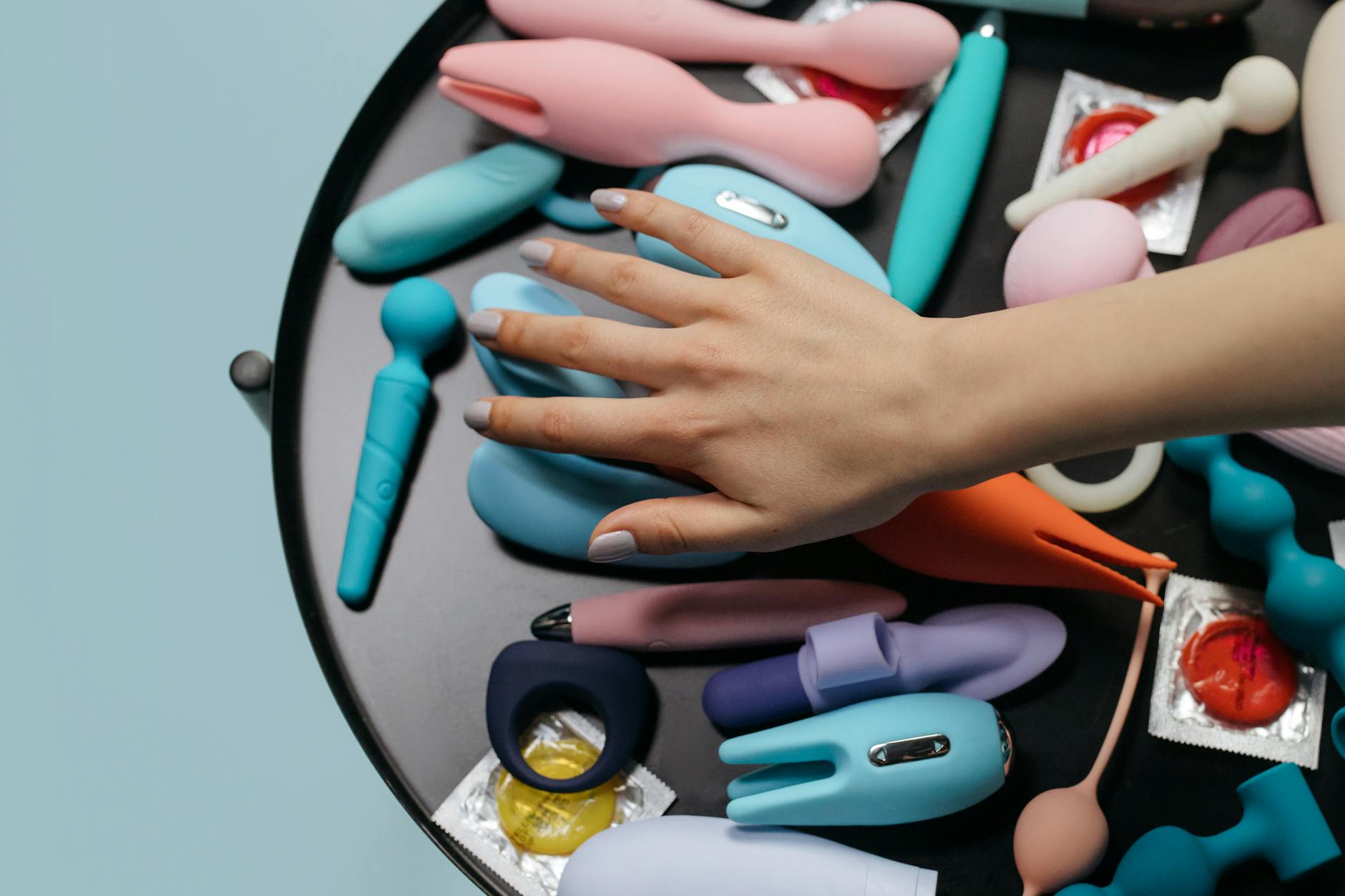
Photo by cottonbro studio on Pexels
FAQ: What People Actually Ask About Desire, Aging, and Lemon Vibrators
Does desire actually decrease with age, or is that just what people expect?
Both. Physiological changes do affect arousal, especially around menopause and andropause. But the cultural narrative we inherit makes those changes feel catastrophic when they're really just different. The research shows that people who stay curious about their sexuality report stable or increasing desire well into their 70s. Expectation matters enormously.
If I start using a lemon vibrator now, will I become dependent on it?
No. If anything, the opposite is true. When you use a vibrator as a regular practice, you learn exactly what your body needs to feel aroused. That knowledge transfers to other contexts. You're not becoming dependent on the tool. You're becoming literate in your own pleasure.
My partner wants me to want sex more. Can a lemon vibrator fix that?
It can help, but it's not a fix for a relationship problem. If you're having mismatch around desire, that's a conversation with your partner or a couples therapist, not a vibrator problem. What a lemon vibrator can do is help you get clear on what you actually want independently of pressure. That clarity then makes it easier to have an honest conversation with your partner.
How often should I use my lemon vibrator to keep desire alive?
Once or twice a week is ideal for most people. The goal isn't quantity. It's consistency. Your nervous system likes predictability. When pleasure becomes a regular ritual instead of a rare event, your relationship to desire fundamentally shifts.
Will using a lemon vibrator solo change how I experience sex with my partner?
Almost certainly, yes. In good ways. You'll know your body better. You'll have less performance anxiety because you've reminded yourself that you can pleasure yourself. You'll have clearer communication about what works. Those are all things that deepen partnered sex.
At what age should I worry about desire disappearing?
Never. That's not a useful worry. What's useful is paying attention to your desire now, whatever age you are. The people who maintain connection to pleasure across decades are the ones who treated it as a practice in their 30s and 40s, not something they'd address if it became a problem later. Start now.
The bottom line
Your fear of losing desire is understandable. The good news is it's also mostly preventable. Desire doesn't disappear with age. It just asks for more attention, more intention, and better tools. A lemon vibrator gives you all three. More importantly, using one consistently tells your nervous system and your brain that you're not waiting for desire to happen. You're choosing it. And that choice, made over and over again, is what keeps sexuality alive and responsive for life.
If you're ready to get curious about reconnecting with your desire, reaching out to talk through what that looks like for you is always the next step. You deserve to feel confident about your sexuality at any age.