Here's what nobody tells you about long-term pleasure
There's a gap that opens up in relationships. It's not always obvious. You're still affectionate. You still want your partner. But somewhere along the way, physical pleasure stopped feeling connected to the emotional intimacy you share. It's like they're two separate rooms in a house you used to move between freely.
This isn't a sign anything is broken. It's actually really common. And it's fixable. One of the most useful tools I've found in my practice is introducing lemon clitoral vibrators not as a replacement for partner intimacy, but as a bridge back to it.
The disconnect actually makes neurological sense
When we're in long-term relationships, pleasure and intimacy can fall out of sync for specific reasons. Routine dampens novelty. Stress reshapes how your nervous system responds. Boredom isn't failure. It's just what happens when the same pattern plays out for years without variation.
Here's the counterintuitive part: pleasure and intimacy aren't the same system. You can feel deeply intimate with someone and have zero sexual response. You can have physical pleasure and feel emotionally distant. These are two separate neural pathways firing independently.
Rebuilding that connection between them isn't about working harder. It's about changing the signal.
Why lemon vibrators specifically work here
Lemon vibrators, like the Lem, create a distinct sensation pattern your body hasn't encountered ten thousand times before. That newness matters. When you introduce a different stimulus, your nervous system wakes up. It's not about the toy replacing your partner. It's about the toy interrupting the routine enough that pleasure can feel present again.
When pleasure feels present and real in your own body, it becomes easier to bring that presence into partnered sex. You remember what wanting actually feels like.
There's also something simpler happening: you're giving yourself permission to prioritize your own sensation. Most people in long-term relationships have learned to prioritize their partner's pleasure or the mechanics of connection. When you use a lemon clitoral vibrator solo, you're practicing the skill of selfish pleasure. That skill transfers.
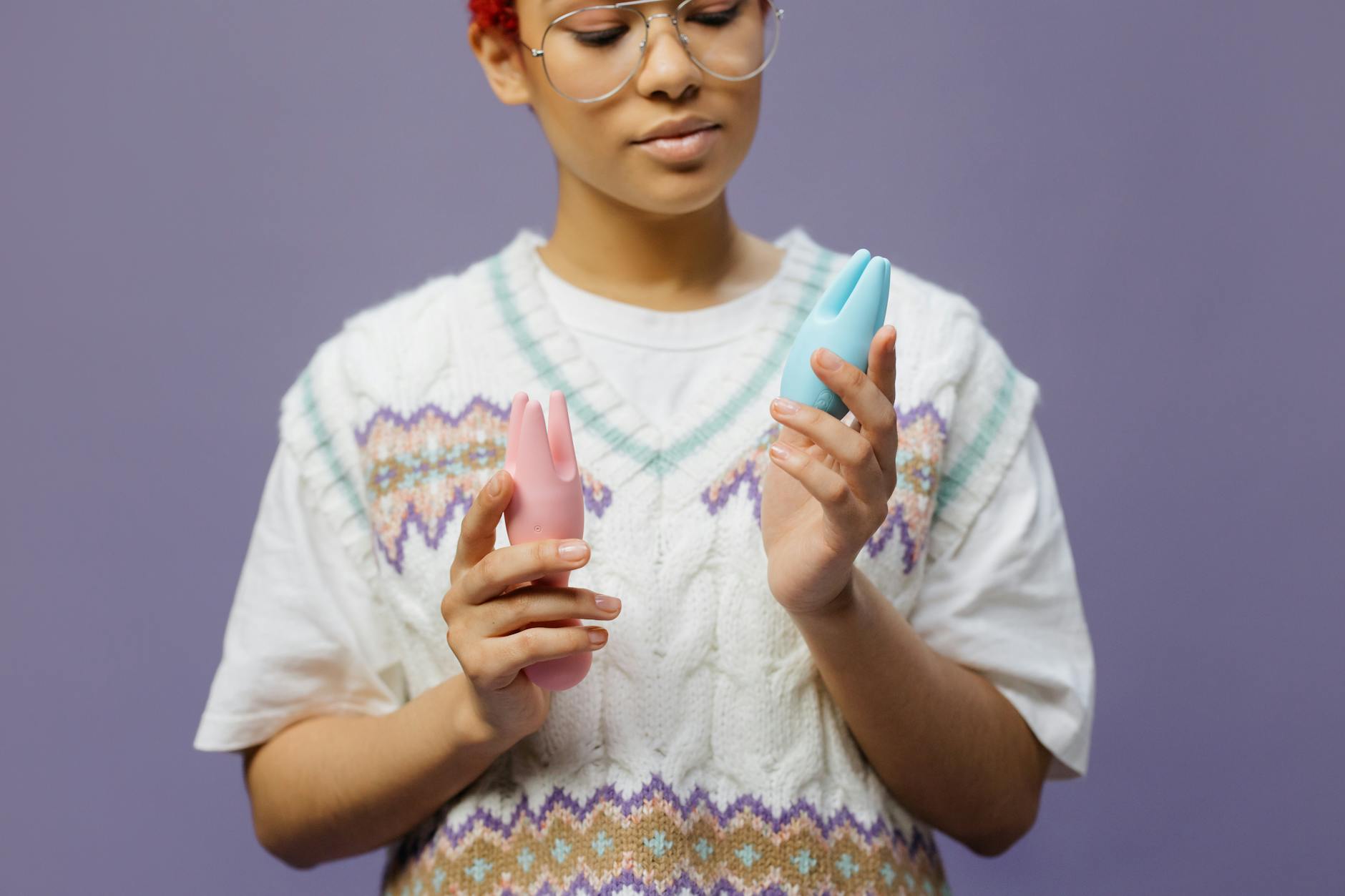
Photo by cottonbro studio on Pexels
The solo pathway: rebuilding pleasure from yourself
Before you bring a lemon vibrator into partnered sex, spend time with it alone. This isn't therapy. It's research. What you're looking for is simple: what patterns on your Lem actually feel good? Not what you think should feel good. What actually does.
Most people have never asked themselves this directly. They've learned pleasure through a partner's touch or their own instincts, but without a tool that offers multiple sensations, they've never really played.
Try each pattern for at least 30 seconds. Notice which ones make you want to stay longer. Those are your pleasure signals. They're telling you what your body is actually asking for right now, in this season of your life.
Then, here's the bridging part: bring that knowledge into partnered sex. Tell your partner what you found. Not in a performance way. Just factually: "Pattern three on my Lem feels really good. I think I might want to use it with you sometimes." That conversation is already rebuilding intimacy. You're saying: my pleasure matters, and I'm willing to share that with you.
The partnered pathway: reframing the toy as connection
There's a moment most couples hit where toys feel like a threat. Like if your partner needs a lemon vibrator to finish, something is wrong with the partner or the relationship. That's backwards thinking. A lemon clitoral vibrator isn't a replacement for intimacy. It's a translator between two bodies that have gotten stuck in the same old language.
When you use a lemon sexual toy with your partner watching, holding, or participating, you're actually doing something radically intimate: you're showing them what pleasure looks like on you. Not performing it. Showing it. That's a completely different experience.
Start small. Maybe your partner is in the room while you use your Lem. You're not ignoring them. You're including them in your pleasure. Then, once that feels natural, invite them to participate: hold the toy, control the pattern, use it on you while you're kissing them. These small variations rebuild novelty and connection simultaneously.
What happens to desire when pleasure comes back online
Desire isn't constant. It fluctuates based on stress, hormones, sleep, and whether your nervous system feels safe. When pleasure has been absent for a while, desire also gets quiet. The two of you have become efficient roommates instead of lovers.
When you reintroduce pleasure through solo use of a lemon clitoral vibrator, something shifts. Your body remembers that good feeling is possible. That memory rewires what you're reaching for. You start thinking about sex again not as something you schedule or negotiate, but as something you want.
That desire is magnetic. Your partner feels it. And it becomes easier to initiate partnered sex not from obligation but from actual hunger.
The conversation you need to have (and when)
Introducing a lemon vibrator to your relationship doesn't need to be a heavy talk. But it does need to be direct. Pick a moment when you're not in bed, not stressed, just together. Say what's true: "I've been feeling disconnected from pleasure lately. I got a lemon vibrator to explore that solo, and it's helping me remember what I like. I'd love to explore that with you too, if you're interested."
This opens the door without demanding anything. Your partner can say yes, no, or "maybe later." All of those are fine. The point is you're naming something that's been invisible.
Many partners are relieved to learn there's a concrete tool that might help. Many are curious. Some need time to adjust, and that's okay. Give them that time. This is a process, not a one-night event.
Real obstacles and how to move through them
Some couples hit resistance. Your partner feels intimidated. You feel embarrassed. You try it once and it feels awkward. All of this is normal friction, not a sign it won't work.
If your partner feels threatened, start without them present. Let them see that you're using a lemon clitoral vibrator solo because you value your own pleasure. Once that becomes normal in your mind, and you're not treating it like a secret, the threat softens.
If you feel embarrassed, remember: you're doing this because you love your relationship enough to try something new. That's not shameful. That's commitment.
If the first attempt feels clumsy, try again. Every new thing feels weird initially. The Lem is a tool. Tools take practice. After three or four times, most couples find a rhythm that works.
When to know this is working
You'll notice small signs. Your partner initiates sex more often. You think about them during the day in a way you haven't in years. You're more playful. Conversation feels lighter. These aren't magic. They're just what happens when pleasure and intimacy sync back up.
You might also notice you're more comfortable in your own body. That's one of the quieter gifts of solo exploration with lemon vibrators. You learn your body's language. That knowledge makes you a better partner too.
FAQ: When Pleasure and Intimacy Feel Separate
Can using a lemon vibrator solo actually improve partnered sex?
Yes. When you learn what patterns and intensity your body responds to, you have clearer information to share with your partner. You also practice receiving pleasure without needing to manage their response. Both of those skills transfer directly to partnered sex.
My partner thinks toys mean our sex life is failing. How do I handle that?
Reframe the conversation. A lemon clitoral vibrator isn't a band-aid on a broken connection. It's a tool to interrupt routine and rebuild novelty. Couples who try new things together report higher satisfaction. You're not fixing a problem. You're deepening an experience. Sometimes saying it that way helps.
How often should I use a lemon vibrator solo if I want the benefits with my partner?
There's no magic number. What matters is consistency and presence. Using your Lem twice a week while actually paying attention to what feels good is more useful than daily use while distracted. The point is pleasure, not frequency.
What if my partner wants to use the lemon vibrator on me but I'm uncomfortable?
Start with them watching. Then them holding it without turning it on. Then them holding it while it's on a low pattern. You're building comfort gradually. Discomfort is just unfamiliarity. It usually softens with repetition and communication.
Can lemon vibrators help if we're considering ending the relationship?
Not if the core issue is incompatibility or a betrayal that hasn't been processed. A lemon sexual toy is useful for couples who are fundamentally connected but have lost the physical thread. If the relationship itself is broken beyond that, a toy won't fix it. But if you're questioning whether to try one more thing, this is worth trying.
How do I explain to my partner that pleasure isn't selfish?
Show them. When you use your Lem and actually feel good, your partner sees that. They see you relaxed, present, satisfied. That's not selfish. That's alive. And alive partners are better partners. The proof is in your nervous system, not in your words.
The path forward
Pleasure and intimacy can absolutely reconnect. It takes permission, communication, and usually, something new to interrupt the old pattern. A lemon vibrator is that interruption. It's not magic. But it gives you something concrete to do while you rebuild the bridge between desire and connection.
Start solo. Notice what you like. Then, when you're ready, invite your partner into that exploration. You're not asking them to solve anything. You're inviting them to discover something together.
That's how pleasure and intimacy get resynced. One pattern, one conversation, one moment of shared presence at a time.
When you're ready to take that step, we're here. Whether you need advice, a tool, or just reassurance that what you're feeling is normal, reach out at /contact. You don't have to figure this out alone.